Preserve Durham's History with a Donation to Open Durham Today!
OpenDurham.org is dedicated to preserving and sharing the rich history of our community. Run by our parent nonprofit, Preservation Durham, the site requires routine maintenance and upgrades. We do not ask for support often (and you can check the box to "hide this message" in the future), but today, we're asking you to chip in with a donation toward annual maintenance of the site. Your support allows us to maintain this valuable resource, expand our archives, and keep the history of Durham accessible to everyone.
Every contribution, big or small, makes a difference and makes you a member of Preservation Durham. Help us keep Durham's history alive for future generations.
The Harriet Tubman YWCA was established in November 1922, first located at the Royal Knights of King David Hall (702-704 Fayetteville Street). The organization then relocated to 508 Fayetteville Street in 1924. 508 Fayetteville Street was originally the home of Dr. James E. and Annie Shepard. Dr. Shepard founded North Carolina College (now North Carolina Central University) and was the college’s first president. 508 Fayetteville Street would go on to house the John Avery Boys’ Club after the YWCA was moved to its final location.
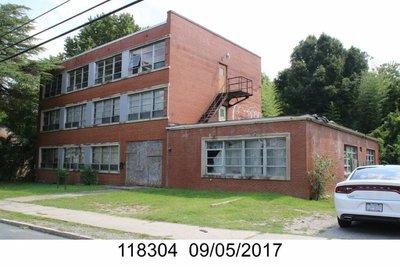
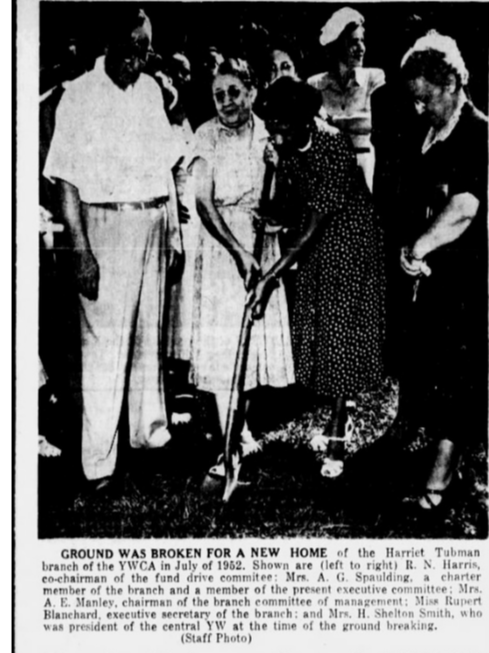
In 1937, the Harriet Tubman YWCA was relocated one final time to 312 E. Umstead Street. 312 E. Umstead had originally been the home of John Moses and Lula Avery. The home was renovated in 1938 to accommodate the space needed for the many services the YWCA provided. It was later demolished to accommodate for the YWCA’s growing needs. Construction on the new building, which is the property that remains today, began in 1952. The new, modernist building was built with three stories: the basement for heating and recreation, the first floor for offices and restrooms, and the second and third floors for housing. The new building was also supposed to have an auditorium and arts and crafts space, but due to funding issues, these were never built.
The Harriet Tumban YWCA was a crucial institution in the Hayti community. Durham’s first YWCA began operation in 1920, but was segregated and therefore only served white Durhamites. There was an impetus to create a YWCA available for Black Durhamites after a YWCA club was established at North Carolina College in 1912. Notable Hayti community members, Julia Warren, Minnie Pearson, and Janie Spaulding led the drive to create a Black Durham branch of the YWCA. Julia Warren and her husband, Stanford L. Warren, hosted many young women at their home prior to the establishment of the YWCA, but were more limited than what a YWCA space could provide. The YWCA thus allowed for numerous young women to live while working, getting an education, and setting roots in Durham. Over the years, it was reported that the available rooms were always occupied, demonstrating the need for this service.
Courtsey of the Durham Sun
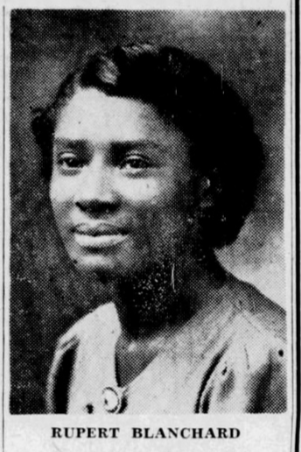
Mercedes Pointdexter was the first leader of the Harriet Tubman YWCA, followed by Johnnie Morris and then Louise R. McKinney. Rupert Blanchard took over the position in 1943 and led the YWCA for over 20 years. Rupert oversaw significant growth of the YWCA during her tenure, with an increase from 100 members when she first started to almost 400 after only 5 years. In 1950, it was reported that over 1,000 people had participated in YWCA programming in a year. Marie Clarke Torian took over the position in 1966, and the Harriet Tubman YWCA continued to grow. Membership reached the mid-1000s in the 1960s, with even more people registered.
The YWCA hosted numerous clubs, organizations, and programs at 312 E. Umstead. Some of the main clubs at the YWCA were the Young Adult Clubs, the Y-Teen Clubs, and the Recreation Clubs. A few of the many programs the YWCA offered included adult education classes, dancing classes, sewing classes, and a photography program. These programs engaged many community members, teaching valuable skills and offering educational opportunities that would not be as accessible without the YWCA. The YWCA also acted as a community gathering space with outside clubs, including business fraternities/sororities, literary clubs, college organizations, and more, hosting their meetings at the Y. Many people who lived along the Fayetteville Street Historic Corridor were members of these clubs and organizations.
One of the biggest draws of the YWCA was the housing. The Harriet Tubman YWCA housing was open to single women. 13 of the 14 original rooms were reserved for short-term residents, with one room dedicated to transient occupants. With the construction of the new building in 1952, there were 18 available rooms. Lodging rates in 1958 were $3.50-4.50 a week, which included a furnished room, dormitory laundry facilities, reception quarters, and a dining hall. It was reported that these rates compared “favorably” with other local housing at this time. Housing at the YWCA provided a basic need for many women of all ages, and even helped spur their careers. For example, Rupert recommended that one woman who was living at the YWCA continue her education, which she went on to do, leading her to secure a position at North Carolina College.
The YWCA also provided a haven for local activists to meet and plan gatherings and protests against segregated spaces and unequal treatment in Durham. Two residents of the Harriet Tubman YWCA, Virginia L. Williams and Mary E. Clyburn, were two of the six protestors at the Royal Ice Cream Sit-In, a notable sit-in that took place three years before the famous Greensboro sit-ins. In fact, the group that planned the sit-in, the ACT, regularly met at the YWCA to plan numerous non-violent protests, including the Royal Ice Cream Sit-In.
The continuous growth of the Harriet Tubman YWCA membership and programming necessitated additions and expansion. In 1948, local Hillside High School boys helped enclose the back porch to add an additional room to the building. Next was the 1952 demolition and rebuild. They also began renting the property next door at 310 E. Umstead, refurbishing it to provide additional housing. In 1969, the YWCA expanded once again, this time to increase program and dining facilities.
Courtesy of the Herald-Sun
The Harriet Tubman YWCA went through a transition period in 1971, when the second-floor residential space was converted to offices due to decreasing occupancy. Despite its residential decrease, the YWCA was still in popular use as a meeting space. The Triangle Lesbian Feminists were among the groups that met at the Harriet Tubman YWCA, creating a vital connection between the LGBTQ+ community and Hayti. Other notable clubs, organizations, and resources during this time included the Durham Women’s Health Cooperative, the Durham Rape Crisis Center, Women in Community Service, and the Duke Workers Organizing Committee. These organizations helped to carry on the legacy of the YWCA as a community service into the late twentieth century.
After the central YWCA branch at 513 W. Chapel Hill shut down in 1976, the Harriet Tubman YWCA became the main YWCA branch in Durham. The Harriet Tubman YWCA officially moved to 809 Proctor Street (Camelot Academy as of 2026) in 1978. The United Holy Church of America Inc. purchased the property in 1979, using it as the Western District of the United Holy Church headquarters. Numerous organizations also continued to meet here, including the National Council of Negro Women. Rooms continued to be leased on the third floor, despite the YWCA no longer being located there. Multiple small businesses, including a dance studio and childcare facility, rented out spaces in the property over the years.
The property was officially listed on the National Register of Historic Places in 2025. Reinvestment Partners purchased the property in 2019. Renovations and rehabilitation of the building are currently underway. Reinvestment Partners intend to return to the roots of the building's history, focusing on historic preservation and adding affordable housing units inside.
Segregated from facilities serving Durham's white community, the Harriet Tubman YWCA was a major site of organizing for civil and women's rights activism.
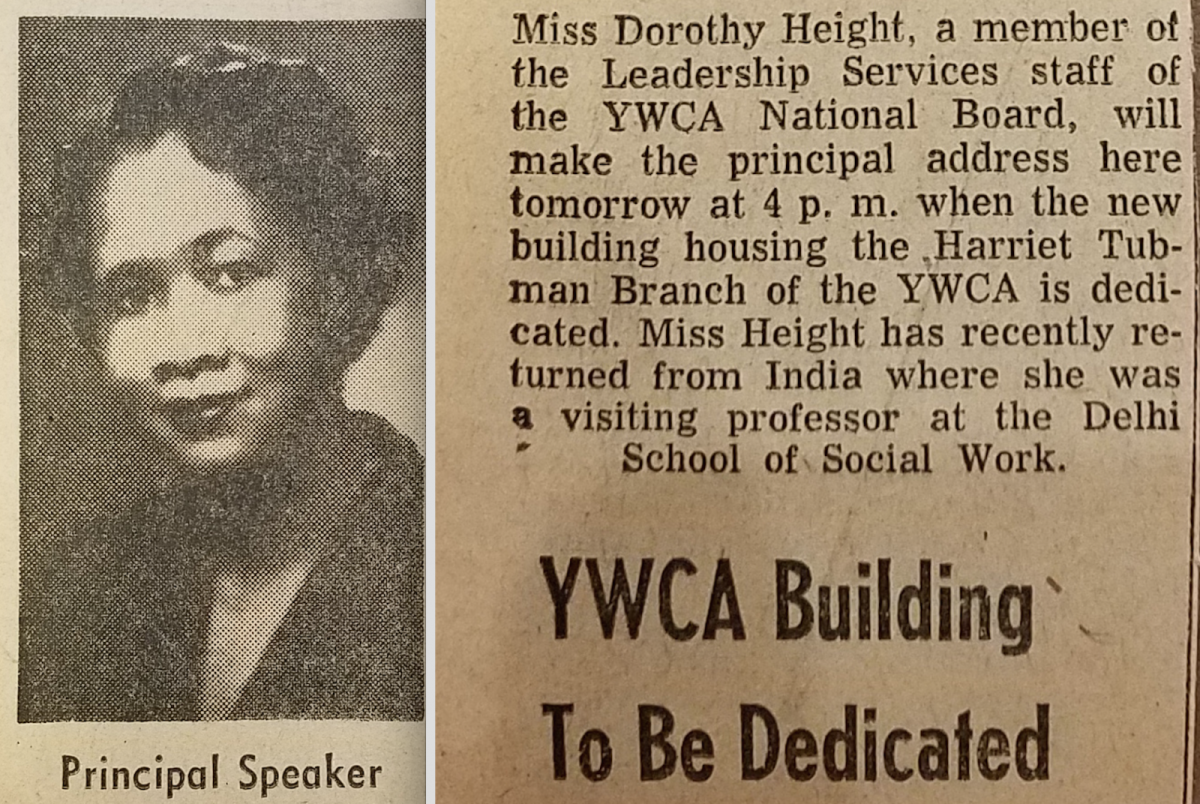
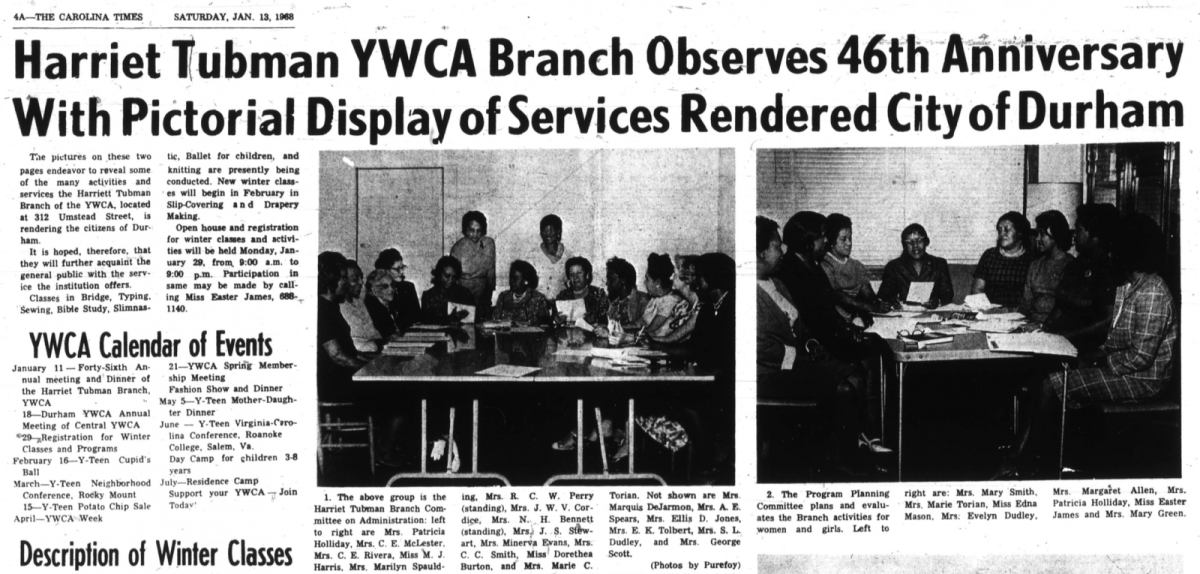
Built alongside the John M. Avery House, which it had used since relocating from its first address on Fayetteville Street in 1937, the Tubman Y's new building opened with a special ceremony on September 27, 1953. Then a member of the YWCA's national board, renowned activist Dorothy Height delivered the keynote address at the dedication.
Durham Morning Herald article, 09.26.53 (Source: YWCA of Durham, N.C. records, David M. Rubenstein Rare Book and Manuscript Library, Duke University, Box 1.)
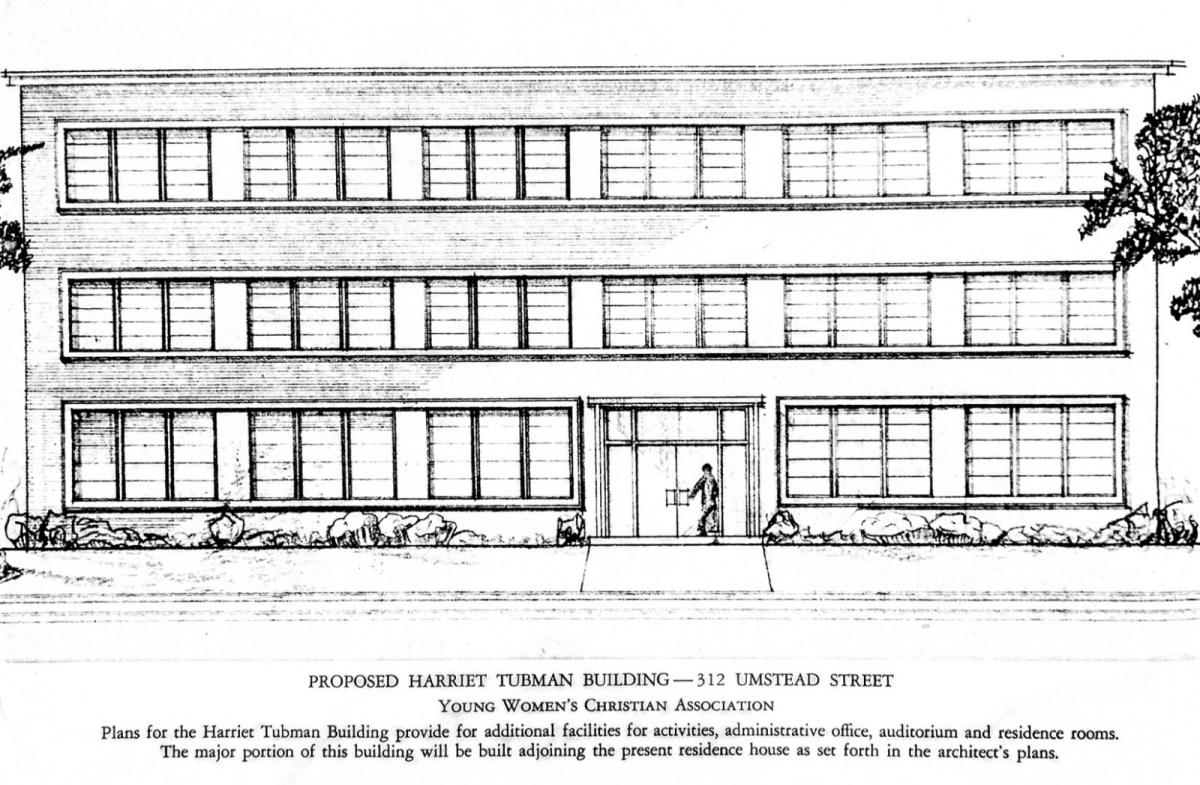
A city-wide fundraising campaign generated the $90,000 invested in the facility as well as a $100,000 expansion of the primarily white Central Branch's new addition that opened the same week. Falling short of the overall $275,000 campaign target explains the simplification of the design from its originally intended form.
Rendering from 1951 fundraiser brochure (Source: YWCA of Durham, N.C. records, Box 1.)
In addition to hosting a range of organizing, youth educational, and job-training activities, the Tubman YWCA was also a residence - providing a home to many young women moving to Durham. It was largely for this reason that the present building was needed, as the number and condition of rooms in the deteriorating Avery House (demolished after 1957) were no longer sufficient.
Virginia Williams, who came to work at Duke Hospital in 1956, recalled years later in an interview: "when I moved at the Y, I found out that it was full of activities. There was always something going on. There was special dinners, special groups. I think the Durham Business and Professional Chain was meeting there at that time. Everybody was meeting there." (Durham Civil Rights Heritage Project, Durham County Library)
It remained a vibrant social center throughout the 1960s in spite of the damage inflicted on the neighborhood by urban renewal and the Durham Freeway project. The Tubman Branch reported over 1800 members and its 24 beds provided nearly 8,000 nights of housing to permanent and temporary residents in the year ending August 1967.
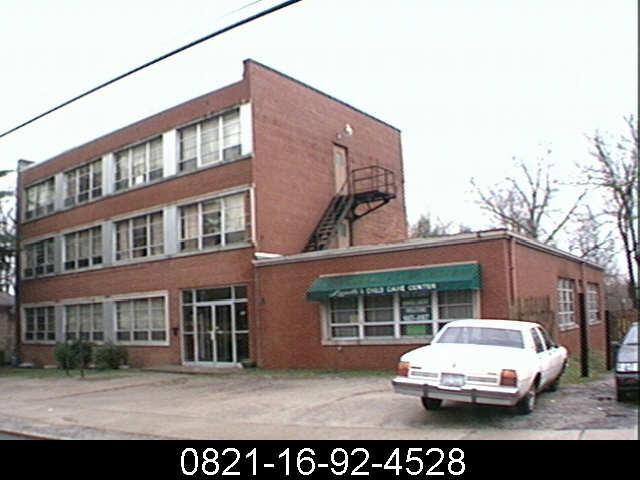
After the YWCA ceased using the facility sometime in the 1970s, it continued to host a number of other community organizations for meetings, and for some time was home to a day care center.
Early 1990s County Tax Records photo showing Child Care Center awning
More recently, the building has changed ownership and suffered damage from disuse and vandalism. In 2012, a study by Preservation Durham and the National Trust for Historic Preservation highlighted the Harriet Tubman YWCA building as a High Priority structure, with significance for community history and as a site that witnessed important "contributions to empowering black women."
As of fall 2018, it is at risk of demolition by the city, though the scheduled August removal has been postponed amid protests from the owner and community activists.
Submitted by Vivian Rahim (not verified) on Fri, 1/24/2014 - 6:09pm
Dear Sir/Madam: I am inquiring about Harriet Tubman YWCA. Is it presently open and if not when did it close. Telephone number of the YWCA; address would be appreciated. Thanks.

Comments
Submitted by Vivian Rahim (not verified) on Fri, 1/24/2014 - 6:09pm
Dear Sir/Madam: I am inquiring about Harriet Tubman YWCA. Is it presently open and if not when did it close. Telephone number of the YWCA; address would be appreciated. Thanks.
Add new comment
Log in or register to post comments.