Preserve Durham's History with a Donation to Open Durham Today!
OpenDurham.org is dedicated to preserving and sharing the rich history of our community. Run by our parent nonprofit, Preservation Durham, the site requires routine maintenance and upgrades. We do not ask for support often (and you can check the box to "hide this message" in the future), but today, we're asking you to chip in with a donation toward annual maintenance of the site. Your support allows us to maintain this valuable resource, expand our archives, and keep the history of Durham accessible to everyone.
Every contribution, big or small, makes a difference and makes you a member of Preservation Durham. Help us keep Durham's history alive for future generations.
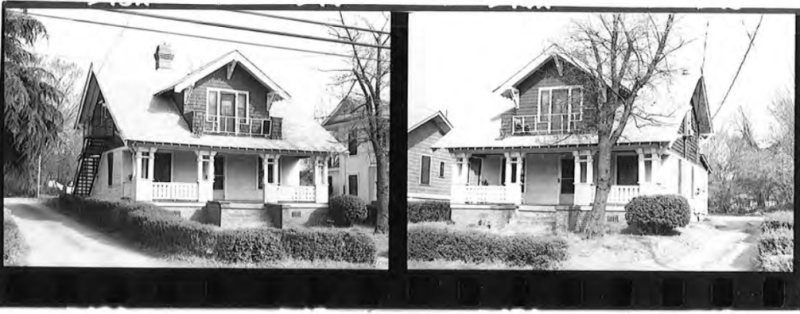
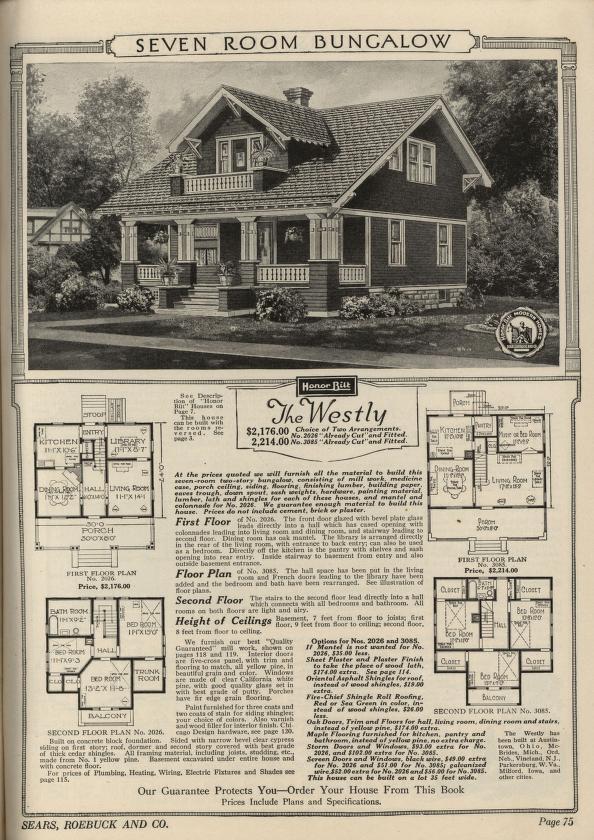
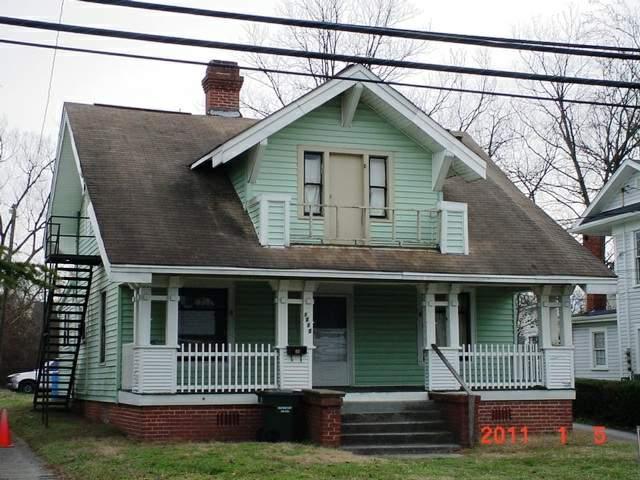
Aubrey St. Clair and Sarah Nurse were the original owners of 1215 Fayetteville, living in the home when it was built in 1925. The home was a Sears & Roebuck house, specifically the Westly model. Aubrey was a dentist, and Sarah was a domestic worker. They are only noted to have lived in the home for a year according to the Hill City Directories.
'The Westly' in Sears,Roebuck and Co. Catalogue
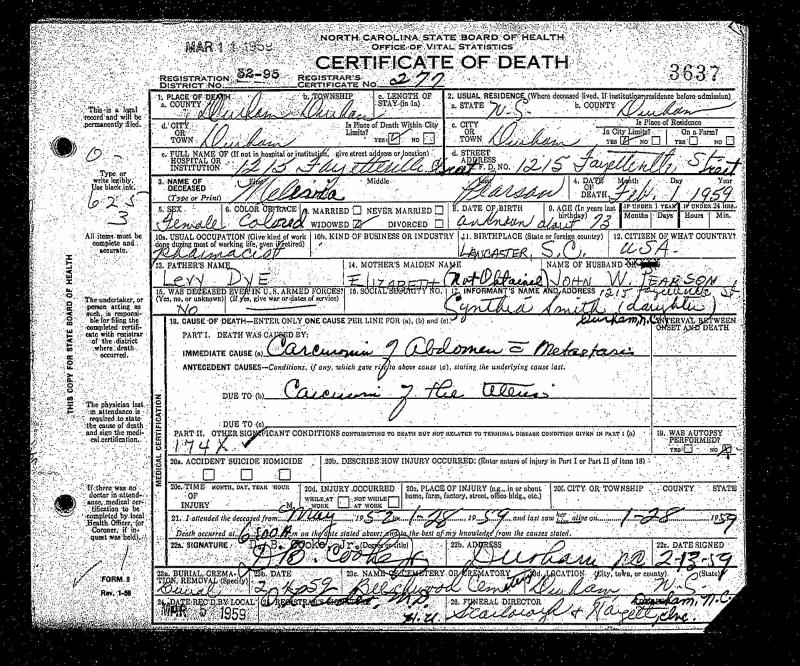
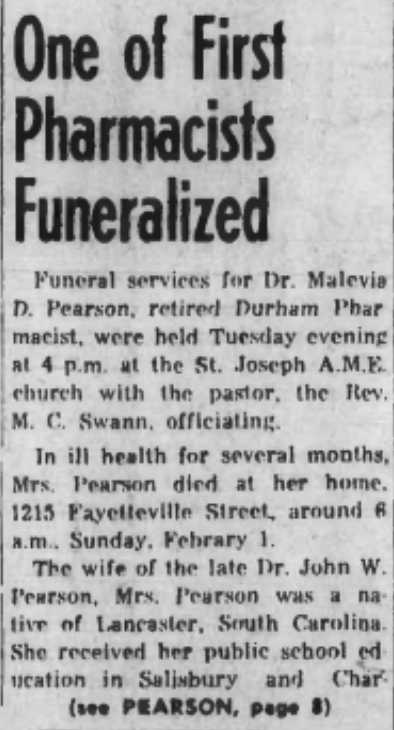
Drs. John Westley (J.W.) Pearson and Malevia Pearson moved into the home in 1927. The Pearsons, along with their daughter, Cynthia, lived in the home until Malevia died in 1959. John Westley was the brother of William Gaston (W.G.) Pearson, one of the numerous individuals who were integral to the success of Hayti as a beacon of Black wealth. W.G. was the principal of Whitted High School, the first African-American Graded School. He was then principal for 30 years at Hillside High School. When a new school for Black students was built in 1928, it was named after W.G. Pearson, “Durham’s Black Superintendent.”
W.G. and J.W.’s parents were enslaved, and W.G. was born enslaved. J.W. was born after the Emancipation Proclamation, so he was likely never enslaved.
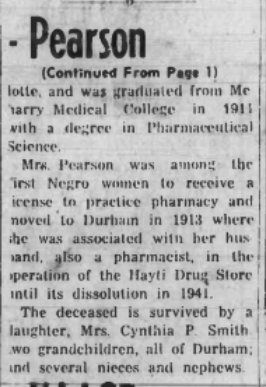
J.W. and his wife, Malevia Dye Pearson, were both pharmacists and owned Hayti Drug Store located at 618 Fayetteville Street. Malevia was cited as one of the first Black, female pharmacists. She attended Meharry Medical College, where she earned her Pharmaceutical Sciences degree. J.W. and Malevia moved to Durham together in 1913. The store was built in the early 1920s and was the Hayti Drug Store until 1941. It was then home to numerous other businesses until the late 1960s-early 1970s, when it was demolished.
J.W. and Malevia’s daughter, Cynthia, married George Booth Smith. Cynthia and George were listed as living at 1215 Fayetteville in the Hill Directories until Malevia died in 1959. George Booth Smith was a postal carrier. Cynthia was a French teacher at Hillside High School until 1970. During her retirement, Cynthia was a co-editor of the Negro Braille Magazine. The Negro Braille Magazine, now the Merrick-Washington Magazine, was created by Lyda B. Moore Merrick, inspired by her friend John Carter Washington, who believed there should be more reading material for the blind.
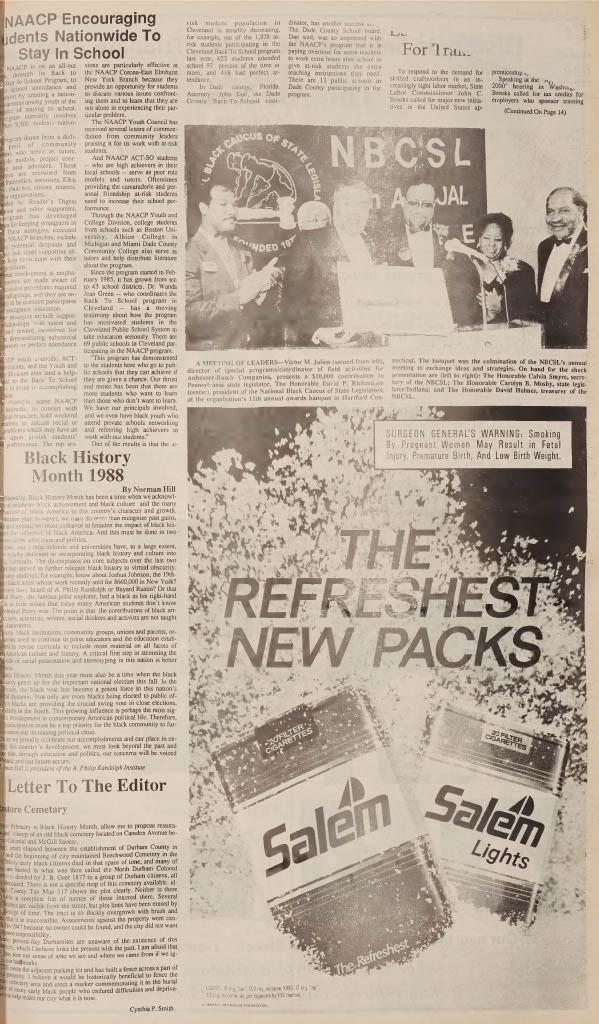
Cynthia was an early advocate for the restoration of Geer Cemetery, submitting a letter to The Carolina Times editor in support of its rehabilitation and preservation in February 1988. Cynthia’s and others’ submissions to the Carolina Times were important motivators for the Historic Preservation Society of Durham (now Preservation Durham) and other community members to begin the research and preservation efforts of Geer Cemetery.
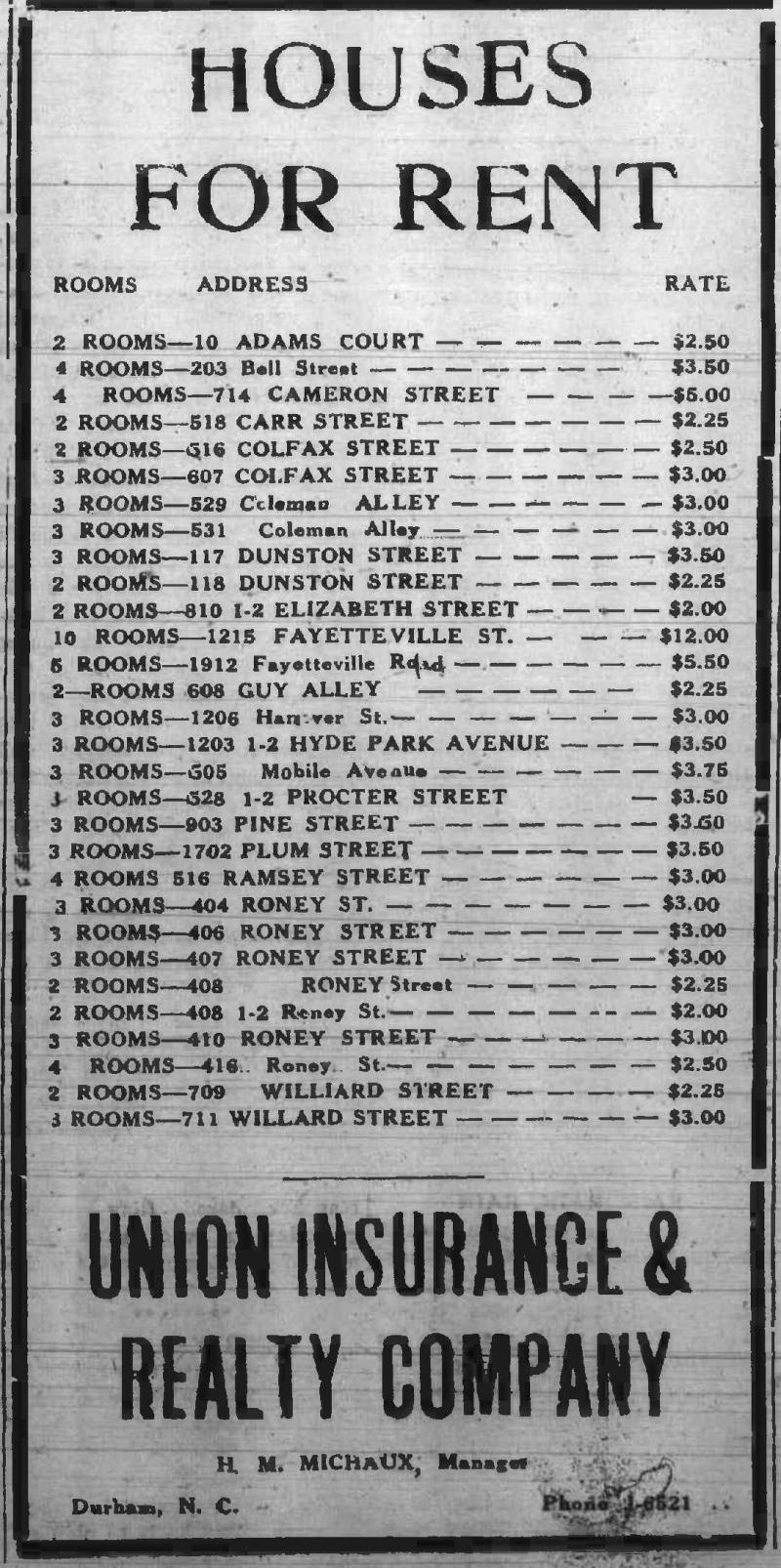
The property was purchased by E. Lavonia Allison, F.V. Allison Jr., and Bernice Ingram, owners of Dunbar Realty, in 1993. It was likely that this became a Dunbar rental property, as it had a long list of renters. The home was rented out before Dunbar Realty’s ownership, starting in 1960. It continued to be rented out, including under Dunbar Realty’s ownership, until 2019. It has been vacant since 2019.

Add new comment
Log in or register to post comments.