Preserve Durham's History with a Donation to Open Durham Today!
OpenDurham.org is dedicated to preserving and sharing the rich history of our community. Run by our parent nonprofit, Preservation Durham, the site requires routine maintenance and upgrades. We do not ask for support often (and you can check the box to "hide this message" in the future), but today, we're asking you to chip in with a donation toward annual maintenance of the site. Your support allows us to maintain this valuable resource, expand our archives, and keep the history of Durham accessible to everyone.
Every contribution, big or small, makes a difference and makes you a member of Preservation Durham. Help us keep Durham's history alive for future generations.
(Below in italics is from the National Register listing; not verified for accuracy by this author.)
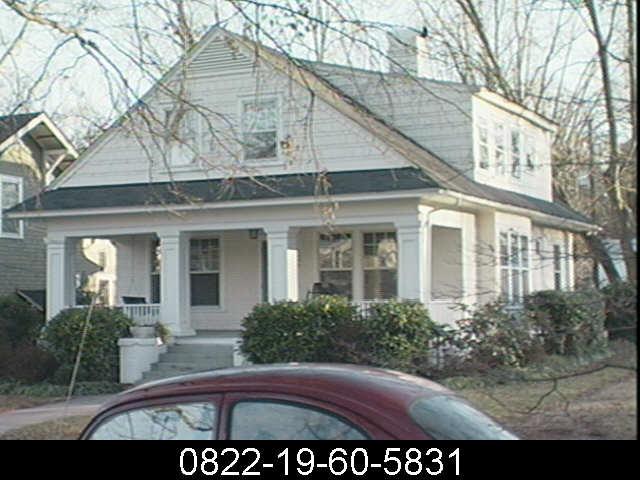
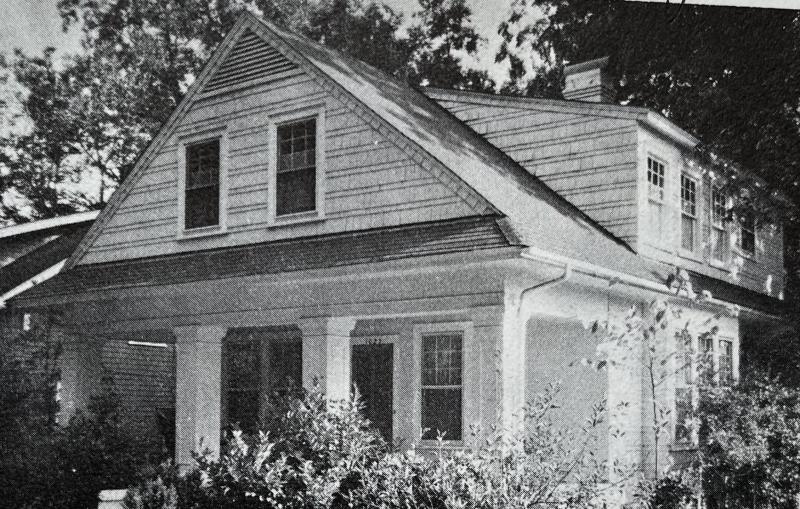
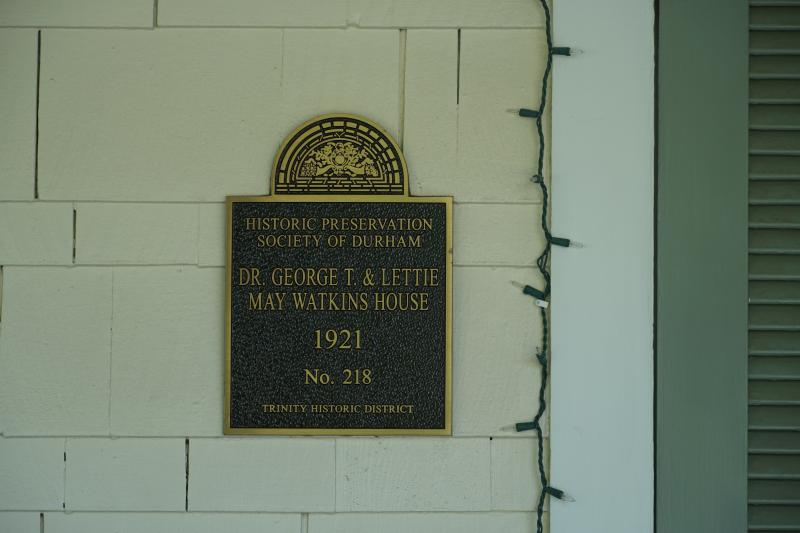
One-and-one-half-story bungalow with pedimented front and shed-roofed dormer on the west (side) elevation. Distinctive exterior features include sheathing of alternating rows of tall and short split shake shingles, and substantial panelled and molded posts supporting the full-facade frsnt porch. Constructed 1922 for Dr. G.T. Watkins, Jr. , a physician.
__________________________________________
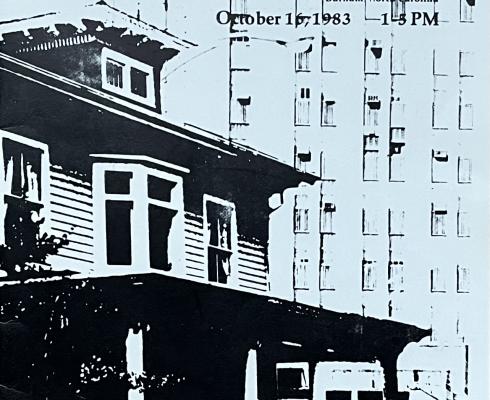
from A Home in the City: The Trinity Park Fall Home Tour, October 16, 1983:
1023 West Trinity Avenue
When Ernest and Marian Burke moved to Durham from Los Angeles in 1980 they were hoping to find an older home in a charming neighborhood that had character but was also in good condition. They found such a home at 1023 W. Trinity Avenue.
The only major change the Burkes made was to enlarge the kitchen. This was done by removing the wall between the kitchen and breakfast nook, thus creating a bright, airy and spacious eat-in kitchen.
The 1925 bungalow has many features typical of that era--including a wide front porch, high ceilings, gleaming pine floors and windows galore. Some believe it was one of the first "speculative" houses in Durham, built perhaps by Dolian Harris, an investor and part-time coffin dealer. Harris probably assembled the house from a ready-cut kit. This "mill-to-consumer" approach was very popular and economical in its time with most bungalows selling for $1,200-1,600.
The Burkes find their home perfect for combining contemporary and antique furniture. Of particular interest is Ernest's great-grandfather's school master's desk. The splendid pecan tree which shades the house grew from a pecan planted by the original owner on the day his son was born.

Add new comment
Log in or register to post comments.