From the Preservation Durham Historic Plaque Application:
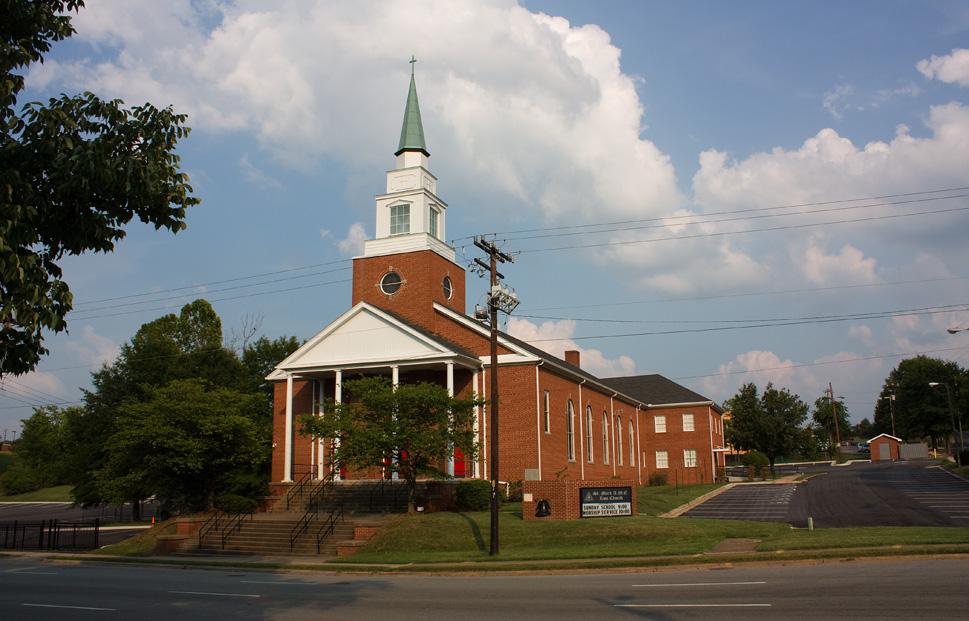
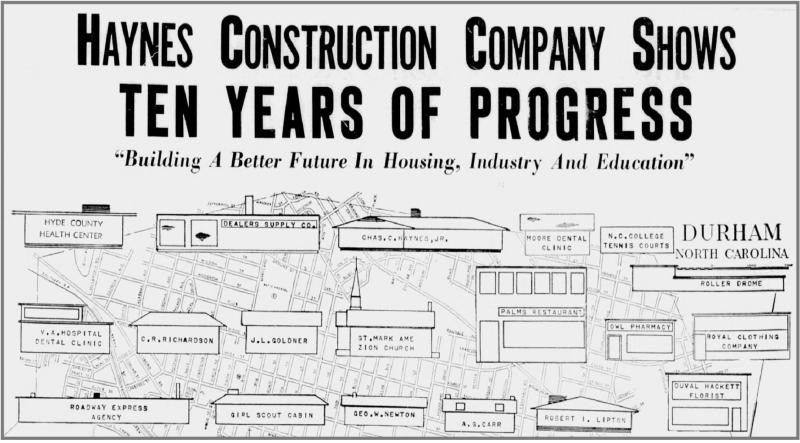
Originally located at the home of William and Flora Colley, the current structure of the St. Mark African Methodist Episcopal Zion Church has been located at 531 S. Roxboro Street (originally the corner of Pine and Pickett Streets) since 1900. The first official structure, a white frame building, was built in 1900, followed by a grey building, and finally, in 1954, construction started on the current structure. The congregation began to use the current church in the Fall of 1955. Included in the new construction was an auditorium, 17 classrooms, and a basement that could seat up to 700 people.
Gaston Bynum, William Colley, Jerry Richmond, Jordan Wilson, Flora Colley, Sarah Marsh, and Derbie Richmond founded the church in 1890. Descendants of the Bynum, Colley, and Marsh families have attended the church for over 136 years after their ancestors first established it, as well as many other congregants. Reverend C.H. McIver was the first pastor at St. Mark A.M.E. Zion Church, followed by 25 pastors, with the most recent being Reverend G. Ray Coleman.
St. Mark’s twentieth pastor, Reverend Still Pryor Perry, oversaw the construction of the current church structure. Reverend Perry’s influence on St. Mark was significant, as he served as pastor for twenty years (1936-1956), quintupling the original tenure of A.M.E. Zion pastors' usual four-year term during this era. During this period, St. Mark was the largest predominantly African-American church in Durham, as well as the largest in the A.M.E. Zion denomination in the Central North Carolina Conference.
The next pastor, Reverend Dr. Reuben Lee Speaks, oversaw the expansion of the church’s education program, adding the nursery school, kindergarten, and first-grade classes. The church has continued to expand through its ministries and classes over the years, some of which are still active today.
St. Mark’s congregation and church leadership also played a vital role during the civil rights movement in the mid-twentieth century. In 1958, the church hosted Representative Adam Clayton Powell Jr., who was the first African-American elected to represent New York in Congress, for a keynote address. Representative Powell’s keynote address was partnered with an NAACP membership drive, demonstrating the importance of the church as a community gathering space for civil rights advocacy. Furthermore, St. Mark’s 22nd pastor, Reverend Lawrence Allen Miller, advocated for the protection of two all-African-American schools, Merrick-Moore and Little River, which the Durham County Board of Education had planned to phase out. The history of St. Mark’s congregation, leadership, and building is integral to the legacy of the civil rights movement in Durham.
St. Mark’s A.M.E. Zion Church still has an active congregation with weekly worship and Bible Study classes. They also lead the Learning Center Ministry, an after-school tutoring and educational opportunity program. The church is also undergoing a $400,000 renovation.
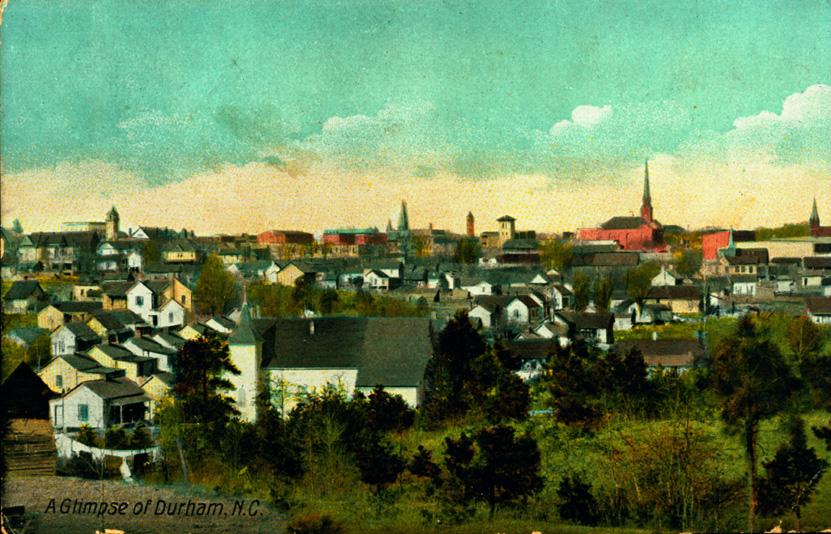
Looking north from the present-day location of Rolling Hills, ~1910. The St. Mark Church is visible in the foreground. Other prominent structures visible in the distance include (left to right) the Trust Building, the Hotel Carrolina, First Baptist Church, Fire Station #1, Union Station, the original Durham County Courthouse, Trinity Methodist, the Lyon Tobacco Co, Pine St. Presbyterian, the Venable Tobacco Company, and First Presbyterian. The street running diagonally from the left foreground to the right background is Pine St. (present day South Roxboro.)
(Courtesy John Schelp)
The St. Mark African Methodist Episcopal (AME) Zion church was founded in February 1890 by Reverend C.H. McIver and members Gaston Bynum, William and Flora Colley, Derbie and Jerry Richmond, Jordan Wilson, and Sarah Marsh in the Colley home, located on Willard Street. By the early 1900s, a frame church was built at Pine and Pickett Streets, the current location (although the street names have changed.)
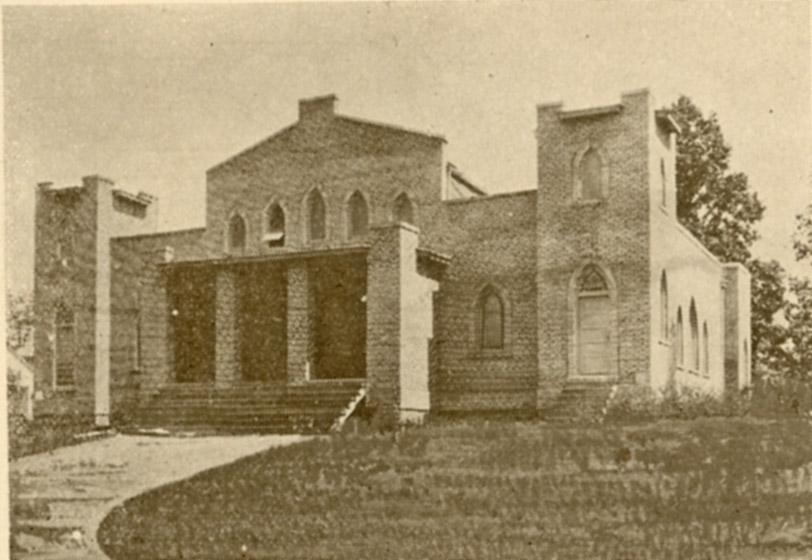
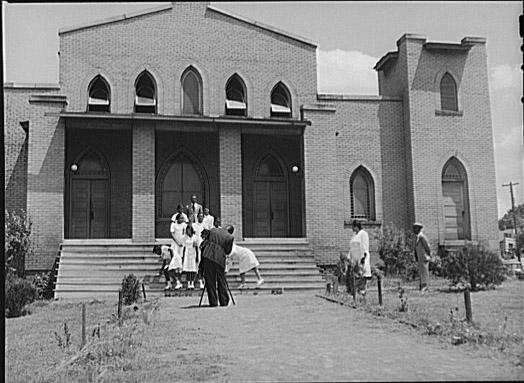
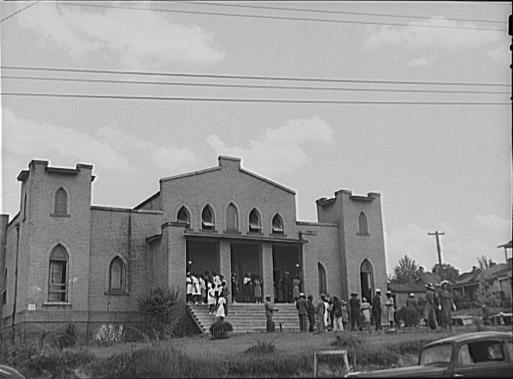
By the 1922, a brick sanctuary had been erected at the current location.
St. Mark's AME Zion, looking east, 1922.
(Courtesy Duke Rare Book and Manuscript Collection / Scanned by Digital Durham)
Looking east, 1940.
(Courtesy Library of Congress)
Looking southeast, 1940
(Courtesy Library of Congress)
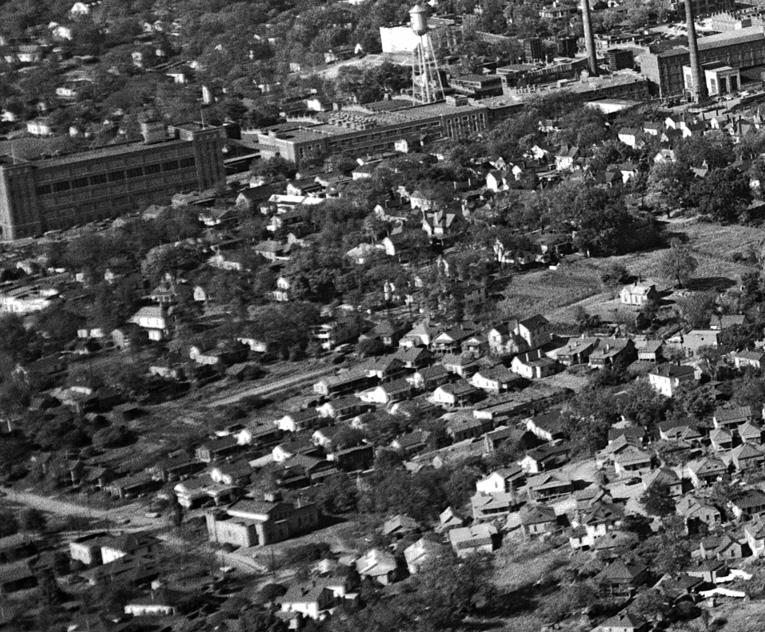
An aerial shot showing the rear of the 1920-1950s structure in the left foreground, with American Tobacco in the background.
(Courtesy The Herald-Sun Newspaper)
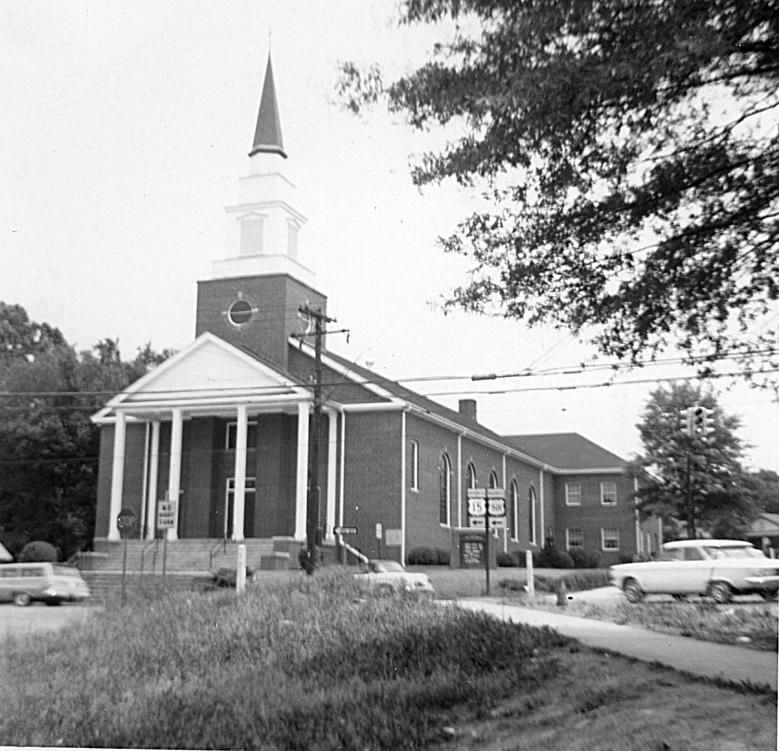
In 1954, this structure was replaced with a new neoclassical sanctuary. A nursery school, kindergarten, and first grade were established in the new facility.
531 S. Roxboro St, 1966.
(Courtesy Durham County Library / North Carolina Collection)
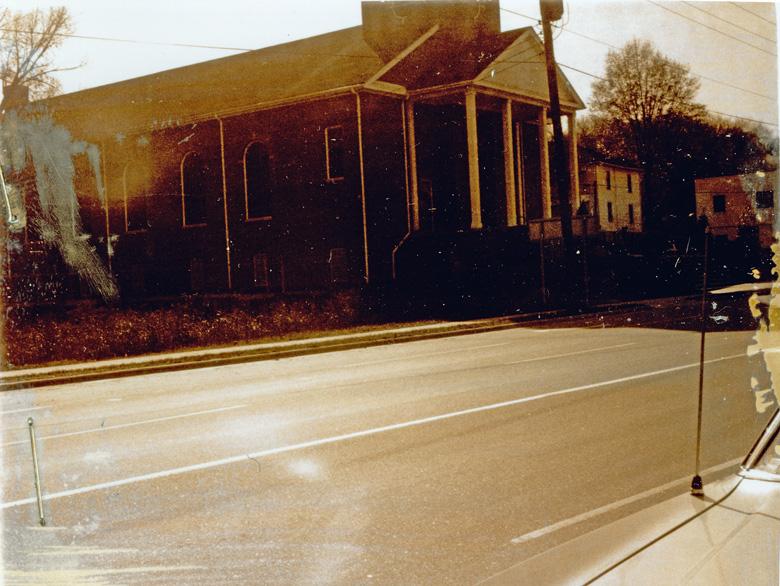
A mid-1960s not-so-great shot, looking south on South Roxboro.
(Courtesy Durham County Library / North Carolina Collection)
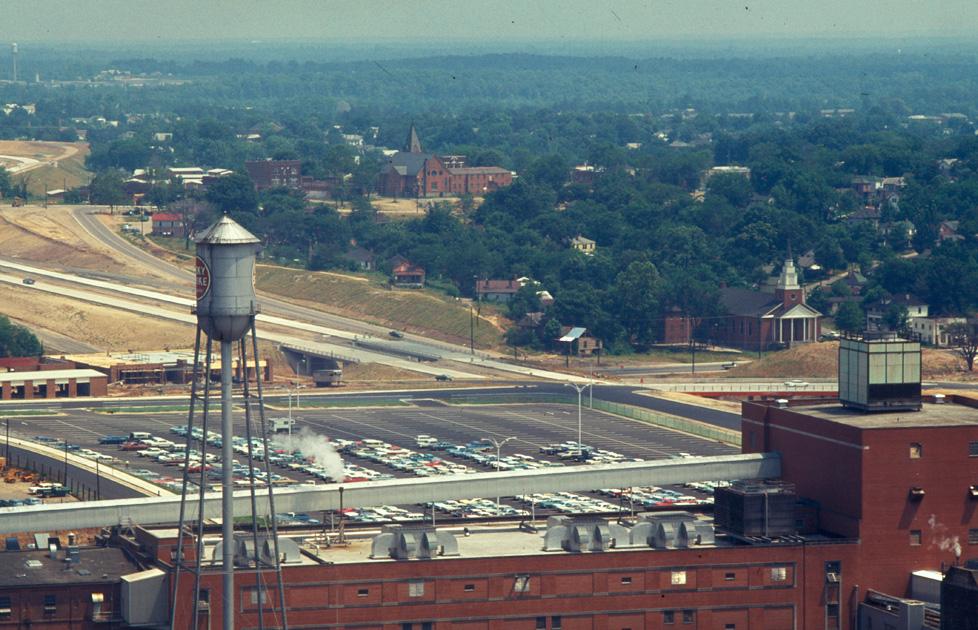
In 1967, the Durham Freeway ('East-West Expressway') was knifed through Durham immediately to the north of this church. By the mid-1970s, all of the surrounding structures of Hayti had been demolished.
Looking southeast at St. Mark's, 1970, in what I think of as a 'missing link' shot - freeway is complete, much of the north side of the freeway has taken on a post-urban renewal form, but many of the structures surrounding the church, including those demolished for the ill-fated Rolling Hills, remain.
(Courtesy The Herald-Sun Newspaper)
The church remains active today, a vibrant, if lonely, remnant of Hayti.
Looking northeast from Lakewood Ave. and South Roxboro St., 08.20.08
Find this spot on a Google Map.
35.988254,-78.90169

Add new comment
Log in or register to post comments.