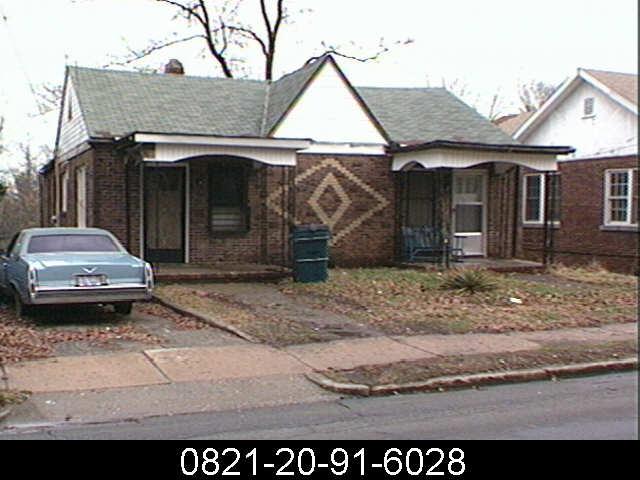
Photograph of the 1605 Fayetteville Street home (photographer unknown) - 1999.
Wendell G. and Edna F. White were the first occupants of 1605 Fayetteville Street. They lived in the home for a few years before moving into Wendell’s family’s home at 1706 Fayetteville St.
The first owner-occupants were Joseph Waverly “J.W.” and Betty Wilson Goodloe, who lived in the property for 20 years. J.W. Goodloe, born and raised in Durham, NC, was a prominent Black business executive during the height of Black entrepreneurship in the 20th century. He graduated as valedictorian of Hillside High School and was the captain of the basketball and baseball teams. He then graduated from Hampton Institute with a degree in business administration and later received an honorary Doctor of Laws degree from Shaw University, where he served as treasurer. Goodloe notably worked at NC Mutual Life Insurance Company for over 50 years, where he held various leadership positions, including president (1968-1972), board chair (1975-1978), vice president, secretary, and chief administrative officer. Dr. Aaron McDuffie Moore, the first president of NC Mutual, recruited Goodloe to work at the company after riding past Goodloe playing outside in 1917. What started as a summer job for the young Goodloe became a lifelong career, as he rose to the highest rank in the company. During his tenure at NC Mutual (1926-1979), he oversaw the expansion of the company’s life insurance coverage to $1 billion (the first Black company to do so) and its asset portfolio to over $100 million; the firm’s merger with the Black-owned Great Lakes Mutual of Detroit; and increased investment in Black community redevelopment. Moreover, while at NC Mutual, Goodloe served on President Nixon’s Advisory Council for Minority Enterprise, and spoke and wrote extensively about the relationship between Black business and the Black Power Movement.
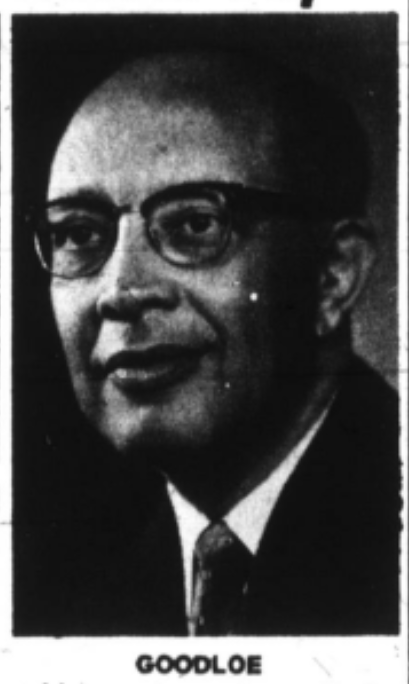
A portrait photo of J.W. Goodloe (The Carolina Times) - June 8, 1968
Goodloe also served as a board chair and executive committee member at Mechanics & Farmers Bank, vice president and board member of the Mutual Savings and Loans Association, president and board chair of the National Insurance Association, and board member of the Durham Chamber of Commerce. Outside of his business relations, Goodloe significantly contributed to the Oxford Central Orphanage, serving as president of the board, and the John Avery Boys’ Club, where he also served on its board. He was a life member of Omega Psi Phi Fraternity, Inc., and served on the Boy Scout Troop 55 committee. Goodloe also spearheaded the Building Fund Drive for Scarborough Nursery School in 1976. He was a trustee board chair at White Rock Baptist Church, participated in the congregation’s “Class In The Corner” study group, and volunteered in the Durham Ushers Union. J.W. Goodloe passed away in 1990, leaving a legacy of Black entrepreneurship and a life of service to the Hayti community.
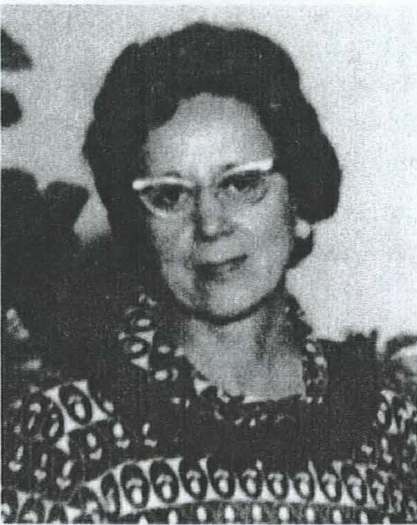
A portrait photo of Betty Wilson Goodloe (from funeral program) - c. June 21, 1991.
Betty Wilson Goodloe, born and raised in Baltimore, Maryland, graduated as valedictorian of her high school and later earned a degree from Norman School and Business College. Through her great-uncles, she secured her first job at NC Mutual and moved to Durham, NC. While working at NC Mutual, she became executive secretary and married J.W. Goodloe. After marrying Joseph, she took leave from NC Mutual and cared for the married couple’s new daughter, Betty Jo Goodloe, who later became valedictorian and “Miss Homecoming” at Hillside High School. In 1948, Betty returned to work, accepting a position as secretary to the president at North Carolina College (now NCCU), serving under two presidents. In addition to her business career, Goodloe also served as president and corresponding secretary of the Durham Chapter of Jack and Jill of America, Inc. Moreover, she actively supported the Oxford Central Orphanage and spent her leisure time with the Thursday Night Bride Club and the Gourmet Club. After retiring, Goodloe also served on the Durham Arts Council and Senior Citizens Coordinating Committee. When Betty’s husband became disabled after suffering from a severe stroke, she gave up her activities and cared for J.W. until his passing. Less than a year later, Betty Wilson Goodloe joined her husband and ancestors, leaving a legacy of service and sacrifice.
The Goodloes lived in the property from 1938 until they built a new house on Masondale Avenue in 1958. As of 2026, the house at 1605 Fayetteville Street is in good, stable condition.
Sources:
Betty Wilson Goodloe Funeral Program, Kelly Bryant Collection, June 21, 1991.
Carolina Times
Durham Sun
Herald-Sun
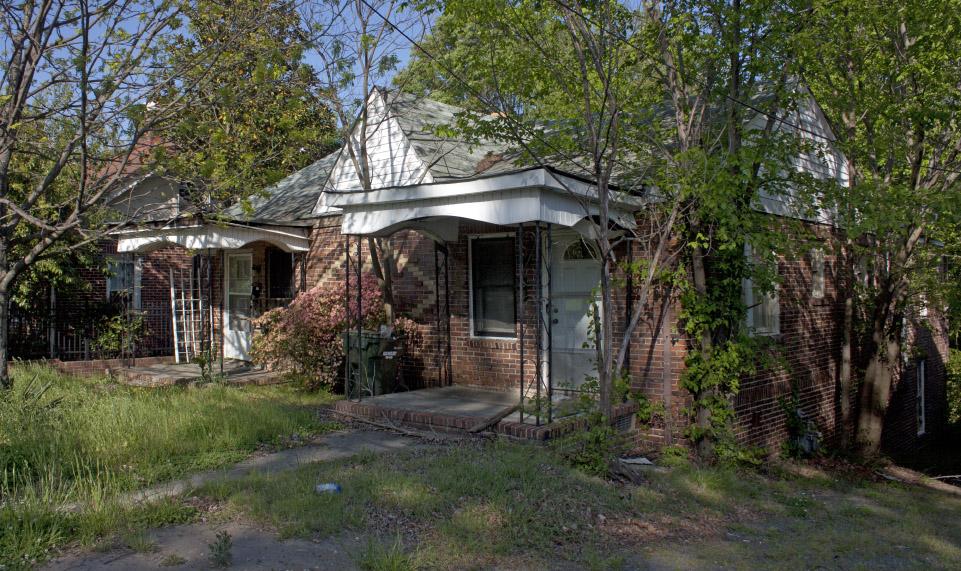
Photograph of 1605 Fayetteville Street home (photographer unknown) - April 8, 2012.
From the Stokesdale National Historic District Nomination:
This one-story, side-gabled duplex is four bays wide and five-pile with a full-width rear gable. The building has a brick foundation and veneer with a brick soldier-course watertable and decorative brickwork under a centered gable on the façade. It has two interior brick chimneys, retains six-over-one, double-hung wood sash windows throughout, and has vinyl siding in the gables. An original three-light-over-two-panel door remains on the left unit. Each unit has a flat-roofed porch with vinyl trim supported by decorative metal posts. The site slopes to the rear to reveal an exposed basement. The building is very similar in form to 1607 Fayetteville. The earliest known occupant is Wendell G. White in 1935 and the building appears as a duplex on the 1937 Sanborn map.

Add new comment
Log in or register to post comments.