Preserve Durham's History with a Donation to Open Durham Today!
OpenDurham.org is dedicated to preserving and sharing the rich history of our community. Run by our parent nonprofit, Preservation Durham, the site requires routine maintenance and upgrades. We do not ask for support often (and you can check the box to "hide this message" in the future), but today, we're asking you to chip in with a donation toward annual maintenance of the site. Your support allows us to maintain this valuable resource, expand our archives, and keep the history of Durham accessible to everyone.
Every contribution, big or small, makes a difference and makes you a member of Preservation Durham. Help us keep Durham's history alive for future generations.
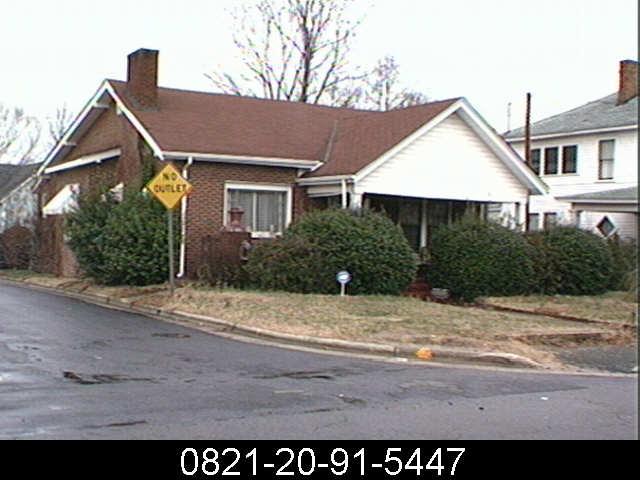
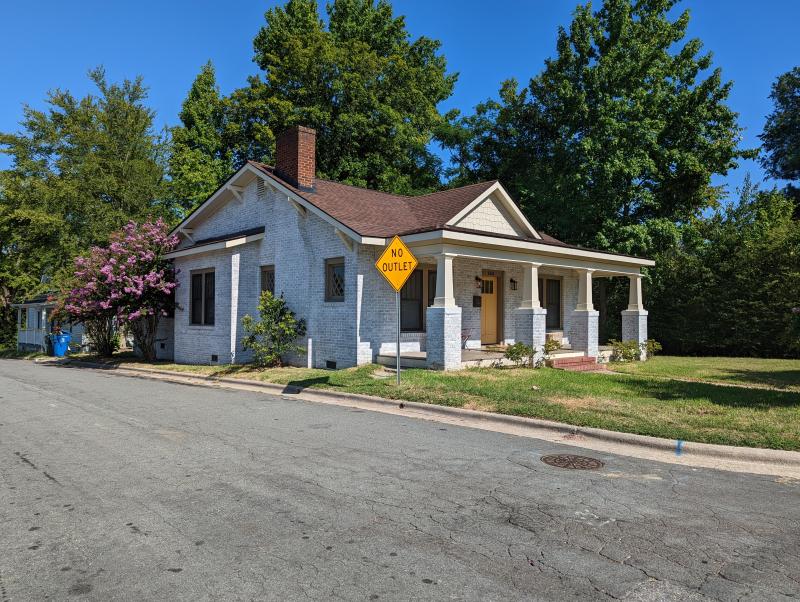
This one-story, side-gabled house is three bays wide and four-pile with a full-width, shed-roofed rear ell. The house appears to have been constructed as a bungalow, but had a major renovation done in the late 1940s or 1950s, where windows were replaced and a front-gable roof with metal railings with an initial ‘M’ were installed. Early in 2018, the 1950s alterations and porch were removed. Consistent throughout, the house has projecting shed-roofed bays on the north and south elevations, a painted brick foundation and veneer, an exterior brick chimney on the south elevation, and purlins in the gable ends. Windows are now modern 4/1 units, with multi-pane diamond-pane windows on each side of the chimney. A hipped roof front porch sits under a centered front gable with modern shingle siding, and is supported by replacement wood posts on brick piers.
The home was built under the ownership of Robert and Daisie Cross. They lived in the home for two years before selling it in 1924.
The next owners of the house were George Wayne Cox and his wife, Nola J. Cox, who lived there for 17 years. George was born around 1890 in Mississippi. He was educated at Gardner Seminary and Alcorn College. After moving to Durham, he worked as an insurance agent and became a member and trustee of St. Joseph’s AME Church. In 1934, he became the Vice President and Director of Agents of the NC Mutual Life Insurance Company. George was also active in the community and was a 33rd-degree Freemason. His wife, Nola, was also born in Mississippi around1896. Both passed as a result of a heart condition, George in 1956 and Nola in 1973.
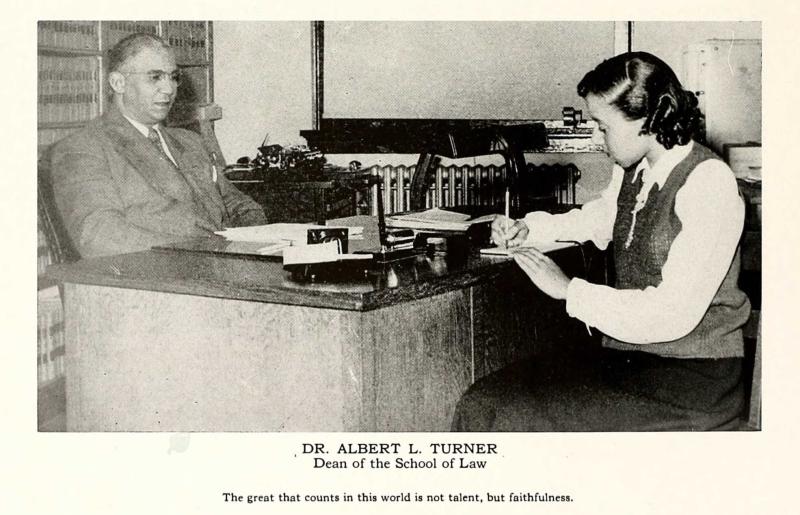
The next occupant of the house was Albert L. Turner. He was born on April 7, 1900, in Louisiana. He got his undergraduate and law degrees at Western Reserve University and his M.A and Ph.D at the University of Michigan. After serving as a registrar at the Tuskegee Institute, he became faculty at the NC College for Negroes, now NC Central University. The very next year, he became the Dean of the School of Law, a position he would hold until his retirement in 1965. In recognition of his work, Albert Turner was named dean emeritus after retirement and until his death in 1973.
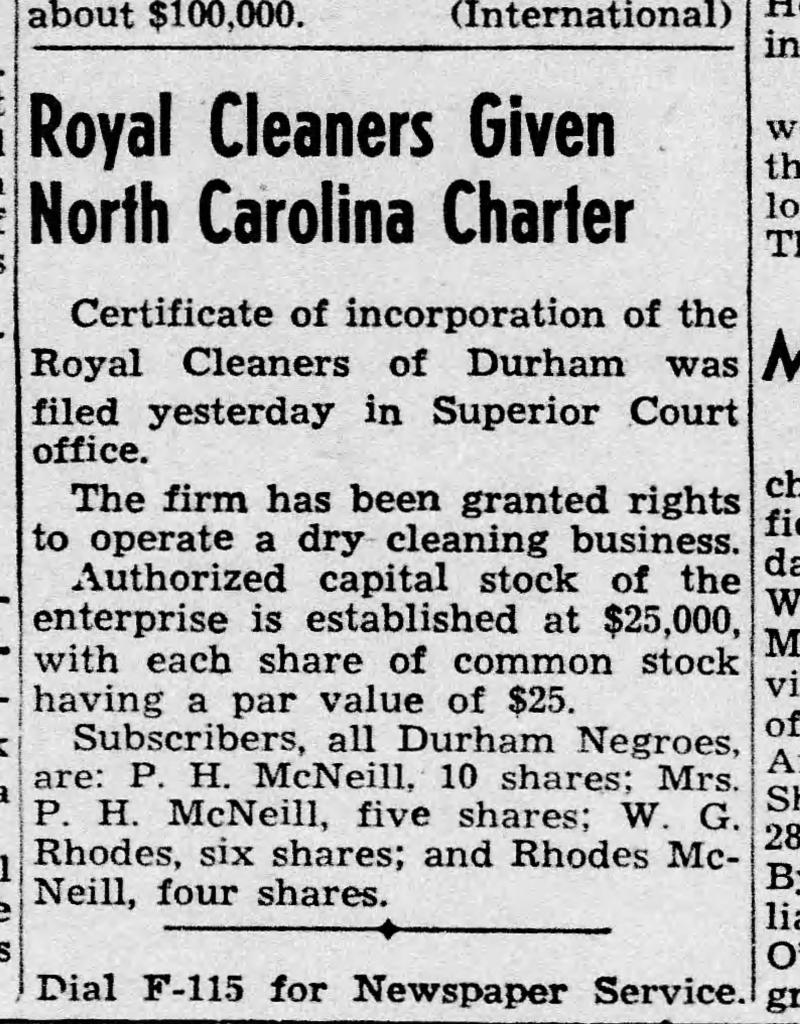
1504 Fayetteville went on to be occupied by more notable figures in Durham. Prentis McNeill was the Chairman of the Board, Enterprise Realty Company, and Manager of Royal Cleaners, his drycleaning business on Pettigrew St. He lived there with his wife, Gladys, a school teacher. Additionally, Dr Robert P. Randolph, a physician and director of health services at NCCU, had an office there with his wife Emma, a registered nurse.
As of 2026, the home is in good, stable condition.
Source:
Herald-Sun
Remodeled 1504 Fayetteville Street, August 2022 (N. Levy).


Add new comment
Log in or register to post comments.