04.08.12
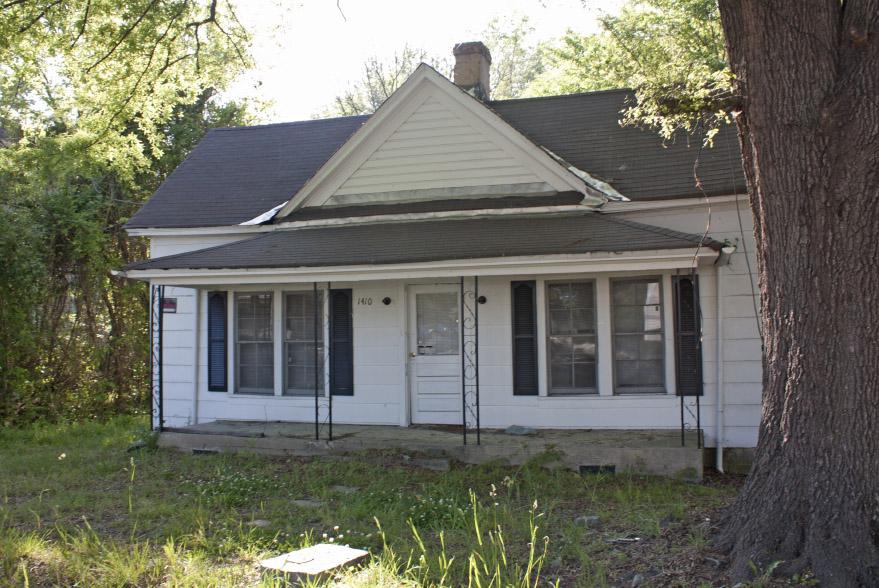
Lewis and Minnie Turner were the first documented occupants of 1410 Fayetteville. The couple were both born in North Carolina, and owned and lived in the home for one year. Lewis worked as a farmer and laborer, and Minnie as a laundress and maid.
Lathrop Alston bought the property in 1944. Lathrop never lived in the property, but his parents, Issac and Annie Alston, did. Isaac and Annie lived in the property from 1945 until both died in the 1950s. After their passing, Lathrop continued to own the property, renting it out until 1982.
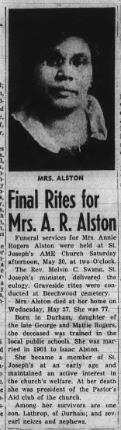
Annie Rogers Alston was born and raised in Durham. She attended St. Joseph’s A.M.E. Church from a young age and continued to attend the church until her death. She was very active in the church, notably as the president of the Pastor’s Aid Club.
Isaac Oscar Alston was born in Chatham County, North Carolina, and eventually moved to Durham, where he married Annie in 1901. Isaac worked at Liggett and Meyers Tobacco Company for 35 years. The couple lived at 1510 Fayetteville prior to moving down the street to1409 Fayetteville.
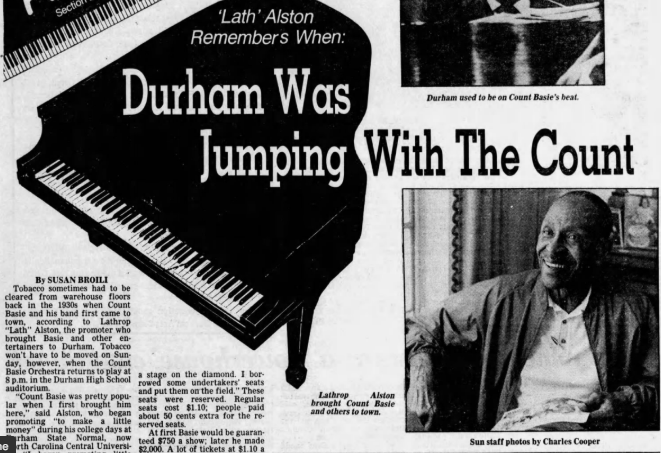
Lathrop was a music promoter who was critical in attracting numerous famous musicians to perform in Durham, including Cab Calloway, Duke Ellington, and Fats Domino. He first worked as a music promoter at the Royal Knights Hall. He eventually moved up to work as the manager at the Biltmore Hotel, a notable hotel for Black residents that hosted some of the most influential Black artists in the twentieth century. The hotel, located at 322 Pettigrew, caught fire in 1977, a month after it had closed. Alston was the manager from 1925 until he closed the establishment in 1977, which he attributed to issues of redevelopment and integration. As a designated hotel for African-Americans, many former guests stayed at other, previously white-owned hotels with upgraded features, leading to a significant drop in occupancy.
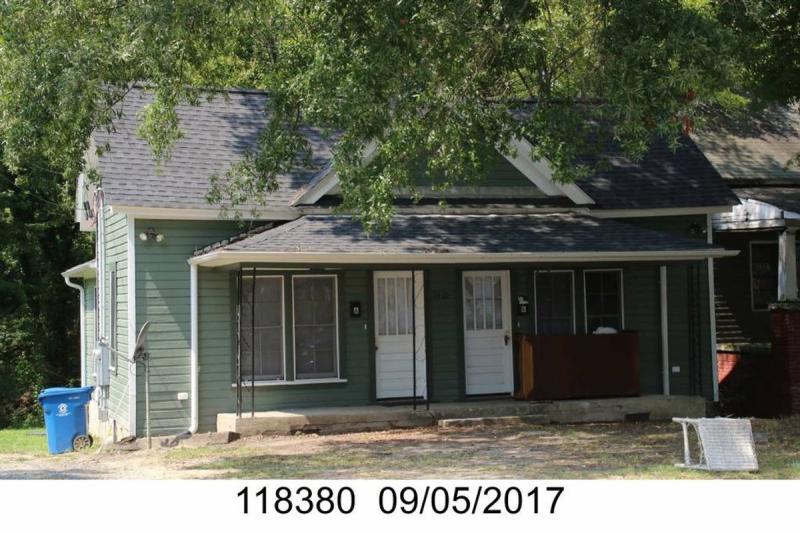
As of 2026, the house is in good, stable condition.
Sources:
The Carolina Times
Herald-Sun
Durham Sun
From Stokesdale National Register Nomination: 1410 Fayetteville – Walter Matthews House – c. 1930 C – Building
This one-story, triple-A-roofed house is three bays wide and single-pile with a full-width, shed-roofed rear ell. The house has a brick-pier foundation with concrete-block curtain wall, Masonite siding on the facade, plain wood weatherboards on the rest of the house, and an interior brick chimney. Molded wood siding remains in the front gable. The house has a partially-boarded-over front door, which appears to be a single-light-over-single-panel wood door. Wood four-over-four, double-hung windows remain throughout, also partially boarded over. The hip-roofed front porch is supported by decorative metal posts on a concrete stoop and is accessed by a granite stair. The earliest known occupant is Walter Matthews (brickman) in 1930.

Comments
Submitted by Willie (not verified) on Wed, 4/2/2014 - 10:05pm
Project Proposal
Add new comment
Log in or register to post comments.