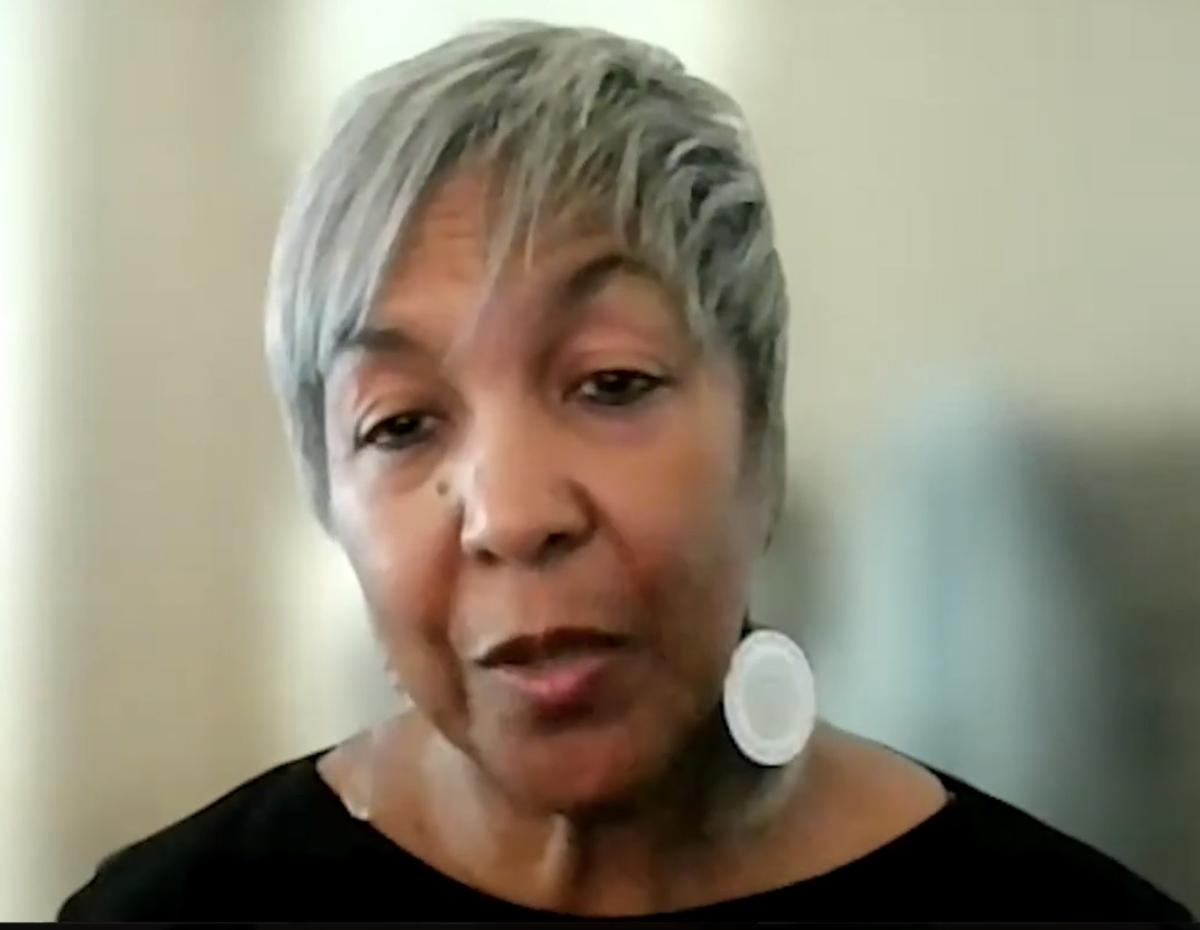
Donna Daniel Davis: My name is Donna Daniel Davis. I did not live in the Merrick-Moore Community; I was bussed to the Merrick-Moore Community prior to integration.
I lived on Highway 54. The address at that time was Route 4, Box 105, Durham, North Carolina. At that time, there was no development off of Route 4. It was near where the old Governor's Inn used to be, near what is now Davis Drive, which runs through the area. My home is no longer there. The land has grown back into trees, so unless I tell the story, no one will ever know that we lived in that area. However, we were bussed to Merrick-Moore because that was the Black school we were required to attend.
Family Life
We had our own little triangle of family. My great-grandparents, Reverend James Mason and Arkadelphia Mason, built their own homes. My grandfather, Otis Mason, who was his son, lived directly across from him alongside my grandmother, Iola Mason. They were well known in the community and in the school system. My grandmother Iola Mason, in particular, was a public speaker and a woman ahead of her time. She was very active in the school because she wanted to see how we were being treated as Black students. Right behind those two houses was my parents' home. My mother was Gladys Daniel, and my father's name was Johnny Martin Daniel. I am the second oldest of nine children; I had three sisters and six brothers.
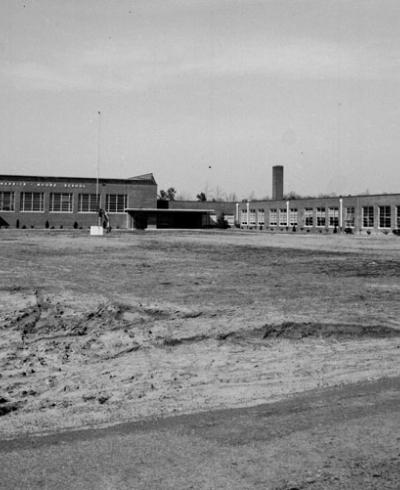
My sister was a school bus driver. At that time, as soon as you got your driver's license—and sometimes even before—if you applied to be a bus driver and completed the training, you could drive a busload of kids to school. So, she was our bus driver. She went on her route, and we rode to Pearsontown Elementary School off of Barbee Road. From there, we would transfer to another bus that took us to Merrick-Moore.
The bus didn't go directly from my house to Merrick-Moore. It went to Pearsontown Elementary School—because Pearsontown and Highland Junior High School were combined—and the buses would arrive there. You would get off that bus and board the bus going to the high school, Merrick-Moore.
In my senior year, my grandparents passed away, and we inherited their home in Morrisville, North Carolina. It wasn't far, but it seemed far to me as a child. My father bought a car for me, and I was able to drive directly to Merrick-Moore instead of going to Pearsontown, changing buses, and taking that bus over to Merrick-Moore. We couldn't keep the car for ourselves indefinitely; as you got older, you had to pass the car down to the next sibling so they could go to school with the same car. The car was strictly for education; that was it.
School Life, Community, and Rivalries
I loved my school, and we felt a strong sense of camaraderie because it was an all-Black school. You couldn't wait for the next group coming in from Pearsontown or Highland Junior High School to graduate from middle school. We were anxious to see them transition from middle school to Merrick-Moore.
I was also excited because I knew that at some point, I would be joining my siblings, my uncles, and my aunts—all of them went to Merrick-Moore; even my mother went there. But it was a process. During that time, you would arrive at the elementary school where the buses parked beside each other, get off your bus, and look for the number of the bus that was taking you to Merrick-Moore High School. That was such an exciting time for me because everyone was waiting to go to high school. You were considered a young adult then, so you could mingle with the high school students.
Once you got to Merrick-Moore, you immediately meshed with the Merrick-Moore Community—the students who lived right around Mount Zoar Baptist Church. Many of the students who lived in that community walked to school, so we would see them walking even though we rode the bus. We all mingled together once we arrived. We were friends with the students who lived in the Merrick-Moore Community as well as those who were bussed from across town. Riding from Barbee Road all the way out to Cheek Road was quite a distance!
That was an experience, but we enjoyed it because we were family on the bus. You knew who was riding and who was getting off. We were always the last ones to go home because my sister had to drop the other kids off on her route first. We were always the first ones to get on the bus in the morning and the last ones to get off going home.
You got involved in activities. I was a majorette at Merrick-Moore, and we had a football team. Merrick-Moore played Hillside High School, and we were rivals at that time. We couldn't wait for that game to occur. Whenever we played Hillside, you knew there was going to be a confrontation somewhere. It wasn't that we were looking for it, but we were told to be on the lookout for it in case we lost or they lost. Hillside was a bit spirited, and our majorettes competed against their majorettes, with everyone trying to outdo each other. It was almost like playing against your rival in college.
Years after integration, Merrick-Moore and Hillside even started holding a joint event called the Hillside-Merrick-Moore reunion because those were special times.
The Black Junior Prom and Integration
The last class to attend Merrick-Moore High School as full-time students were the juniors. Because we knew we would not get to have a senior prom together at Merrick-Moore, we held the first and only "Black Prom" as juniors in 1969. It was fabulous. Usually, you didn't go to the prom unless you were a senior, and you looked forward to your senior year of high school because you knew you were graduating and attending the prom. But since we knew we wouldn't have a senior prom at Merrick-Moore, we held the Black Junior Prom, and it was great. That year, I think everyone went to about three different proms for the first time ever. I went to the Black Prom at Merrick-Moore and was invited to a couple of others as well.
When we integrated into our new schools as seniors—I went to Southern High School—it was a different atmosphere. You could tell things were going to be different because everyone was observing one another. We had been told stories about how white students might treat us. However, when I got to Southern, I didn't see much of that. I think they were also instructed on how to treat us, given that it was the first year of full integration. They were pretty friendly towards me, and we did everything we could to be friendly in return; we didn't go overboard, we were just ourselves. The school community pretty much accepted us.
There were some first-time experiences, of course, but we leaned on each other—those of us from Merrick-Moore who transferred to Southern High School together. We looked for each other throughout the day because that was our strength. Drawing from seeing someone else who went to Merrick-Moore in 1969 gave us support. You cherished that bond, and we leaned on each other just to get through that senior year at the integrated school.
When I went to Southern High School, another girl whose last name was Morgan—her first name was Marilyn—became a very good friend of mine because we had attended Merrick-Moore together. At that time, female students were not allowed to wear slacks or pants to school; you had to wear a dress. But it was extremely cold that winter. Marilyn and I talked about wearing pants, and I said, "Marilyn, it is too cold to be wearing a dress to school. I tell you what: if you wear pants, I’ll wear pants, and if someone says anything, at least we’ll be in it together."
We had to get permission from our parents to wear pants that day. Sure enough, we were the only ones in school wearing slacks, making us the first girls to start that trend at Southern High School.
Even through the years, we remain a close-knit group. We still hold reunions every year, and the bond is still tight. We remember where we came from.
Social Life, Protection, and School Fights
Relationships played a big part back then, too. You could see couples sneaking around during lunchtime. Instead of eating in the cafeteria, people would go outside—since we were allowed outdoors—and spend time together under a tree. When you are in high school, you get smitten by the love bug! Most people who were dating would find their significant other and hang out outside. Interestingly enough, about 15 years later, I wound up marrying the son of my track coach from Merrick-Moore. I didn't even know him back then, but I ended up marrying his son years later.
Most people had relatives—a sister, a brother, or someone already at the school who guided you into your role at Merrick-Moore. I had a sister, an aunt, an uncle, and some cousins who were already there when I arrived because they were older than me. They always talked about what it would be like when I got there. They were very protective of me, and everyone looked out for their family. If you didn't have family there, you looked out for your best friends and your group. Everyone was always looking out for one another.
We didn't use the word "bullying" back then, but it occurred with people who were meek and couldn't stand up for themselves. That even affected me at one point. There was a group of girls that my sister had a disagreement with, and because of that, they attempted to take it out on me. We eventually resolved it because teachers would not allow you to fight.
Whenever a fight occurred, it was considered exciting. Instead of running away from a fight, we would run toward it! People would yell, "Fight, fight, fight!" and everyone would run over asking, "Where, where, where?" to stand in a circle and see who was in the middle.
One day, I heard people calling out "fight, fight," and I ran toward the crowd. When I got there, my sister was in the middle of all those people. She and another girl were daring each other to throw the first punch, saying, "Hit me, hit me!" "No, you hit me!" I said, "Oh gosh, I'll hit you!" I jumped off the staircase banister right into the middle of the ring where they were getting ready to fight and threw the first punch. I wasn't even originally involved, but I saw my sister and stepped in. Those were the kinds of things we experienced, and it was exciting because everyone ran toward a fight rather than away from it.
Educator Influence and Project Opportunity
We had great teachers back then as well. Teachers looked out for us and were permitted to keep us on track regarding our education. I'll never forget a guidance counselor at Merrick-Moore named Mrs. Merritt. She was a fabulous guidance counselor. She would always ask you about your goals and objectives, and if you didn't have any, she would help you set realistic, measurable goals.
I remember telling her that I wanted to be a nurse because my mother was a nurse. When she asked what I wanted to do, I said, "I want to be a nurse like my mom, so I'm going to go to a two-year school," referring to the Lincoln Hospital School of Nursing.
She cut me off immediately and said, "No, you're not."
I said, "I'm not? What do you mean I'm not?"
She said, "You're not going to a two-year school. You're going to a four-year university, you're going to become a registered nurse, and you're going to get your degree."
I didn't know much about being a registered nurse at the time. My mother was a nurse, but she was a Licensed Practical Nurse (LPN). She had attended the Watts School of Nursing and was a graduate of Merrick-Moore back when it was called Mill Grove.
I asked Mrs. Merritt, "Well, where am I supposed to go to get this four-year degree?"
She said, "I don't care where, but you're going to get a four-year degree."
My best friend and I talked about it, and we decided to apply to various places. We both received acceptances from Winston-Salem State University, which is where we both attended nursing school and graduated. Later on, we both wound up marrying into the same family, so my best friend became my aunt by marriage!
We were also involved in an organization that Mrs. Merritt started called Project Opportunity. Project Opportunity was for Black students who showed signs of academic potential. She could see potential in us that we couldn't see in ourselves. She started this program, and based on our grades, she pulled that potential out of us. Both my best friend and I participated in it.
Mrs. Merritt looked around the Durham community for cultural events and arranged for us to attend etiquette classes. She arranged for us to visit Duke University and learn how to be cultured women before heading off to college. She also hosted our first formal dance with boys so we could learn how to properly accept an invitation to the dance floor from a gentleman. She taught us how gentlemen and young ladies were expected to act.
I carried her teachings and training into my adult life. Her expectations became my expectations, and I passed those values down to my children regarding how they should be treated and what to look for in a partner. She was one of the greatest guidance counselors we could have had, which was exactly what we needed as young Black students growing up in that era.
It was a challenging world, but we were sheltered and didn't fully realize the dangers lurking outside because our parents kept us close. You didn't routinely go over to spend the night at other people's homes because our parents understood the realities of race relations at the time. They knew how we might be treated based on their own experiences. As a result, our families were very protective, and the community around our home acted as a village. As the old Ghanaian proverb says, "It takes a village to raise a child." That's what we, as Black children at Merrick-Moore, experienced: the family helping raise us and taking care of us.
To this day, even though I live in Maryland now and have been here for many years—having come here through the military after graduating from college, where I served as an Air Force nurse—whenever I go back home to Durham and run across someone from Merrick-Moore, I am going to be smiling, because it means so much to me to have been a part of that group of people.
My group is in their 70s now. I am 70, turning 71 this year. That's another reason I smile, because our class is 70 years old; we are all in our 70s. It takes me back in thought to all those years ago when we had fun with each other. We were just kids without a lot of worries. We didn't have bills, houses to maintain, or children to raise. We were just free-spirited children back then, trying to make a life for ourselves and learning our way in the world.
Now that we have done that and reached our retirement age, we are just trying to instill those values and leave a legacy.
School Reunions and Passing Time
The reunions are fabulous. First of all, you are looking at each other to see if you even recognize who someone is. Everyone has gained weight, or their face looks a little different. You say, "I think that's... aren't you? Don't I remember? Oh, yeah, I remember your eyes. I remember your smile. I remember you had a mole on your face," or something like that.
Through the years, people have gained or lost weight, so you first have to take a moment and ask, "Didn't you go to Merrick-Moore?" and try to remember who that person is. It takes a while after all these years. Some people have been sick, and it shows in their face. But then you have a few—mostly the men—who still look the same. Many of us women have had babies and look different in our faces and body structure. So, you take a moment to see who in the world you are talking to.
Once you've connected, that's when you go back in time. You start talking about the things you did and the people who were in your class: "Where is so-and-so? How long has it been since you've seen them? Oh, by the way, they passed away last year." That is the sad part of a reunion, especially when you have been holding one every year and the numbers and attendance start getting smaller and smaller.
Usually, when we have a reunion, some people will bring a young adult child, a teenager, or even a grandchild, just so they can see what the camaraderie was like among Black people back then. Because that is how it used to be. As soon as you saw someone, you hugged them, cherished them, and started thinking back to how that person impacted your life.
Sometimes you hear stories about how you meant something to somebody, mentored them, or served as someone they patterned their life after, just by them watching you without ever saying anything. Now, we are at the age where we are the advisors. You are never too old to take advice, but we are the advisors now. We have come a long way and endured a lot in our lifetime. We have suffered a lot, and I think we are definitely ready to lead the world into whatever comes next.
It has been a life of pleasure for me, but also a life of sadness and suffering. We have come a long way since segregation—a very long way.
The Reality of Segregated Education
I want to digress for a minute here. I spoke earlier about riding the buses. Almost nobody walked to school; most of us had to ride a bus. Generally, we had to ride past a group of white kids standing and waiting for their own bus. They were trained to respond the way they did.
I remember a group of us standing outside talking, waiting for our bus to come, and they threw up their middle finger at us, shouting, "Look at the n*ggers! Look at the n*ggers!" Some of them would throw eggs at our bus.
We didn't get new buses; we got old buses from the white schools. They got new books, while we got old, used books from their schools. The books we had in our classes only contained white faces; there was nothing in the books we learned from that depicted Black people accomplishing anything.
When I went to Southern High School as a senior, I remember flipping through a history book, and it finally hit me: this is segregation. I said to myself, "Where are we? Where are we in this book? Didn't we do anything? Did Black people do anything?" That history was intentionally left out of the textbooks.
A lot of what we endured is why, in today's times, we are learning about Black history more intensely. Henry Louis Gates has a segment on TV called Finding Your Roots, which is a phenomenal documentary series. He has really helped us go back in time and find ourselves.
I have done DNA and ancestry research myself, and I have been able to look back at my high school years and realize, "That was my cousin I went to school with! That was my aunt I went to school with!" And I didn't even know it at the time. My sister and I call each other and say, "Did you know John was our cousin? Did you know Lydia was our cousin, and we didn't even know it or talk to them about it?" We talked to them, but we didn't know we were family because people lived so far apart in rural areas. School was probably the only place you saw them. Having DNA tell you, "that was your cousin," has been fascinating to me.
It has been quite a journey. I am so thankful I had the opportunity to go to Merrick-Moore, because that was the first time in my life—outside of my family—that I truly saw the Black connection on an advanced level. Many of us have gone on to make great impacts in the world and in society. It has been great.
Remembering Friends, Leaders, and Loss
When I go back to Durham, I always call my best friend's family, because they kept me straight. I look for them, and I look for my aunts who went to school there. Not a lot of people are still living, and that is the part I don't like to think about because it makes me sad. Almost every day or every week, I hear something about someone passing who was in our class or in the classes ahead of us. The teachers are pretty much all gone, and the principals are almost all gone.
Holloway Funeral Home is very dear to us because Kenneth Holloway and his family were a prominent part of the Merrick-Moore community. Kenneth Holloway and I are very close; we came up through school together. He was in my class and played sports while I was a majorette.
One thing I don't like to do is drive by that funeral home and look at the board to see someone I knew or went to school with. I try to avoid going past Holloway Funeral Home because I know it represents his family's establishment, and I can only imagine how he feels with so many people he went to Merrick-Moore with passing through there—including his friends, loved ones, and his father. I used to tell him, "I don't know how you do this. I don't know how you do it."
He was a big part of the Merrick-Moore community. You really can't talk about Merrick-Moore without talking about the Holloways. They were also members of Mount Zoar Baptist Church. Other families lived right on that street too, like the Bosticks and the Thompsons—Yuba Thompson. They were all very close friends. I hate to hear when someone has gone on to Glory, but we are all going to go one day. That is life.
The Integration Announcement and the DAR Tokenism
It was a sad day when the announcement was made to us during an assembly called by the principal. He explained what was going to happen and tried to prepare us as much as possible mentally for this major transition in our lives. They held PTA meetings to discuss it with our parents so they could work with us at home regarding how we should act and what we might encounter in a white school.
Many of us cried because we knew it meant leaving each other. Because it was such a sad day, we knew we needed closure. We decided to hold the Black Prom, which was the final prom held at Merrick-Moore High School in 1969.
When I transferred to Southern High School in North Carolina, I began to notice that white schools tried to recruit token Black students for various activities. I couldn't understand why I was always chosen as the token Black student, but I was asked to join the Daughters of the American Revolution (DAR). You had to be nominated to join. At the time, I asked myself, "What is the Daughters of the American Revolution?" But I was the only Black student asked to join when I arrived at the white school.
I think that was part of their initiative to include Black students, but I did not accept. Years later, I read about the DAR and realized, "Oh, so this is what that was about." It was about women who aided Confederate soldiers during the Civil War as they fought for slavery. I thought, "Now why would I want to be a part of that?" I am so glad I didn't join. After asking me, they probably realized I wasn't a good fit for the DAR anyway.
Navigating the White High School Environment
When we left Merrick-Moore, we were advised on how to adjust. In a Black school—much like at HBCUs—you are drawn to each other with a lot of playfulness and friendliness. You can say things to each other as Black people that white people can't say to you, or that you can't say to white people. We were told to be careful with what we said and how we said it, and I am sure the white students were told the same thing.
You could see the white students and staff trying hard to be overly friendly and kind. It was as if they didn't know what to say to us because they hadn't been around Black students before. Most of us just went to school and went home.
We were initially told we would have to work extremely hard to compete against white students. But once I got there, I learned I was just as smart, if not smarter. I didn't have to overextend myself, because many of them came from privileged homes where things were handed to them. We, on the other hand, worked and studied hard because our teachers at Merrick-Moore meant business. There wasn't much playing around when it came to education, because they knew what we would be up against one day. I was ready. The teachers at Merrick-Moore had done their job and prepared me for integration, so I knew just as much or more than the white students did.
At the beginning of the year, everyone was feeling each other out mentally and physically, testing boundaries to see what they could get away with. But we actually did pretty well. I developed many friends while I was there, both Black and white. I also had white teachers who genuinely had my best interests at heart.
Most of the students I went to Merrick-Moore with transferred to different schools. Walking through the hallways, whenever you saw another Black student, you would say, "Hi!" You were looking around corners thinking, "Oh, there's one! There's so-and-so." It was like O's among X's—you could spot the O's while the X's walked past you. You picked them out and maintained relationships with almost all of them.
By the end of the year, you would see us hanging out with groups of white kids because relationships had been built. They sought us out, and we sought them out.
I particularly remember one white student who always came to me because I excelled in English; I was a straight-A English student, and he struggled with it. He was always hanging around me in English class and wanted to sit next to me so he could get help. It dawned on me then: "I'm smart, too!"
That's how it was. You realized that some of the stories you had heard—that they were better than you—were not true. They weren't better than you; they were just more privileged. If you do the work and study hard, you can be and do anything you want, especially in this day and time. We were prepared back then for what we face today.
Meeting Rosa Parks
Throughout my education, I had heard about Rosa Parks, but you never saw people like her in our textbooks. After graduating from college and moving to Maryland, I attended an event at the Kennedy Center that a good friend of mine had planned. I was asked to serve as a hostess, and I got to meet and host Rosa Parks. I still have a picture with her to this day.
It was fascinating. I thought, "This is the woman everyone talked about, but whom I never got to see. This is the face from the history books."
At the time I met her, she had a bodyguard to help preserve her energy. Mrs. Parks was a small, petite woman, advanced in age, but very friendly. Because I was her hostess responsible for escorting her, I was able to get close to her. She wanted to sign many autographs, but her bodyguard—a female Black bodyguard who carried a gun—escorted her everywhere. The bodyguard was the one who had to tell people, "She's not signing any more autographs; that's enough." Even though Mrs. Parks wanted to continue, the bodyguard was responsible for protecting her health and had to say no.
I remember Mrs. Parks asking her bodyguard when a young man wanted an autograph, "Well, can't I just sign one more?"
The bodyguard replied, "Nope, Mrs. Parks. No more."
They had to protect her because she was an icon, everyone loved her, and everyone was trying to reach her. You never knew who might try to hurt her. For me, it was such a privilege to escort her and her bodyguard to where they needed to go. It was her 77th birthday at the time. Thinking about it now, as I turn 70 years old myself, it was absolutely amazing. That happened many years ago when I was in my late twenties.
Passing on Values and Life Philosophies
I believe all children—Black, white, or otherwise—need to know the history of their parents and the struggles they endured just so their children could be where they are today. This is especially true if you have caring parents. Some people were raised by grandparents or adopted, but we all came from a struggle at some point in our lives. Things were not always easy.
When we were young, life may have seemed easy because our parents made it appear that way. They kept us out of adult business; you were not in the room when grown people were talking. Now that we are grown with our own families and grandchildren, we understand why they kept us out of grown conversations and away from heated discussions about race with white or Black adults. It helped us grow and better navigate society and the world today.
As I got older and had my own children, I realized that if you don't teach your children right from wrong now and instill values in them, you will lose the future. It is truly a matter of "each one, teach one." You have to teach them the right path. Even if they fall by the wayside, you will have done your job and can pat yourself on the back for raising and educating them the right way, ensuring they have the resources they need.
That is what Mrs. Merritt, my guidance counselor, did for me. I remember coming home and telling my parents what she said.
My dad asked, "How are you supposed to go to college? We don't have money."
I said, "Well, Mrs. Merritt said she's going to show me how to do it."
Sure enough, she showed me what to do and how to do it, and I became the first Black person in my family to attend college.
The community at Merrick-Moore was preparing us, even if we didn't realize it at the time. Looking back at the teachers we had—teachers who genuinely cared for us and wanted us to be the best we could be—it is clear.
I adopted the philosophy of my English teacher, and I share it to this day: continue to strive to excel. She wrote that in my yearbook when I left Highland Junior High School: "Continue to strive to excel."
At the time, I wondered what she meant by those big words. But I dissected the sentence when I got home. Strive means to push yourself forward, and excel means to reach excellence—push yourself to excellence. That became one of my core life philosophies: strive to excel. Whenever I send a graduation card or message to a young person, I always write, "Continue to strive to excel. There is always room for growth and development."
My grandmother would also always say, "Be the best of whatever you are." Those are my two guiding statements: strive to excel, and be the best of whatever you are. If you can't go to college and wind up being a janitor somewhere, my grandmother would say, "Be the best janitor they ever had at that school. Shine the floors like they've never been shined before."
Those are the philosophies I have carried and passed down to my kids. To this day, I tell my grandchildren, "Time does not wait for you. Strive to excel, and be the best of whatever you are."

Add new comment
Log in or register to post comments.