This is the fourth post in a "mini-series" about the intersection of E. Main and Dillard streets. The last corner to examine is the northwest corner, which transitioned from residential to a bus station to a vacant lot.
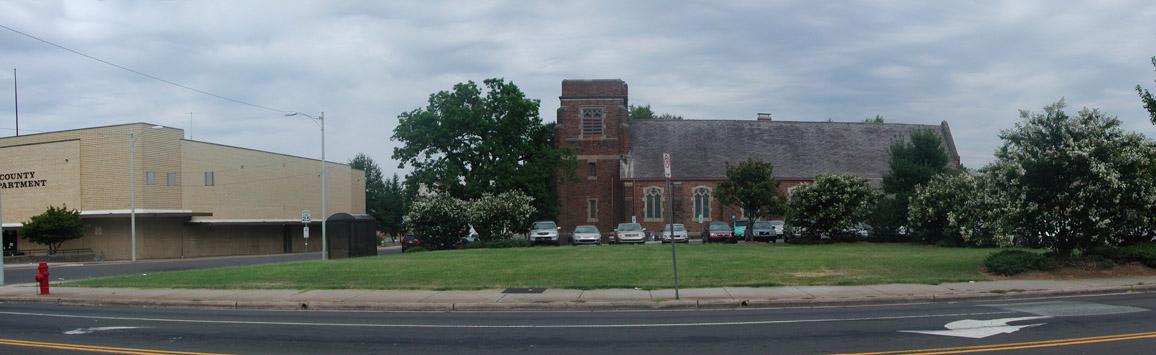
Here is the corner as of this morning 8/7/06, looking west from Dillard.
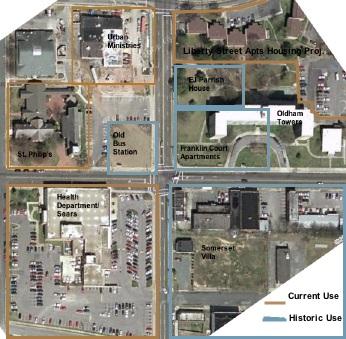
I'll repeat the satellite view here:
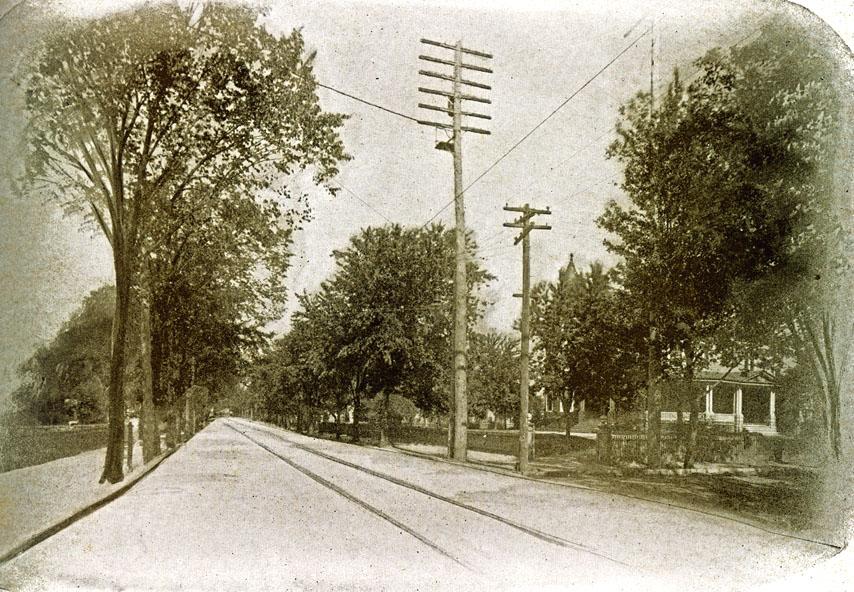
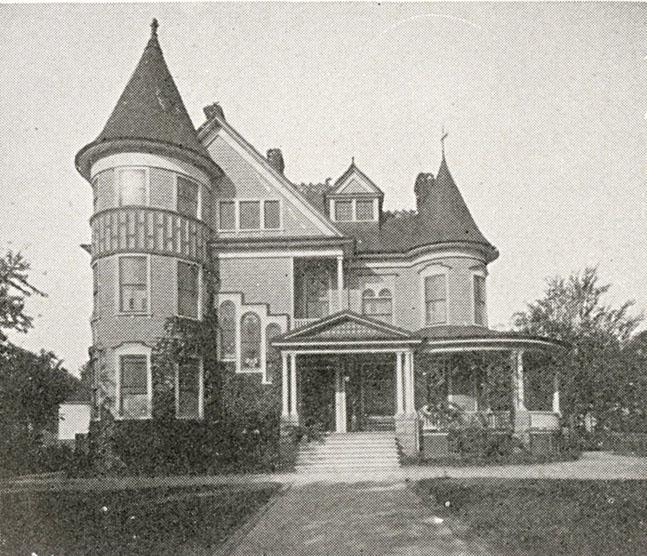
And a view of this corner around 1900.
Looking west-northwest at the northwest corner of E. Main and Dillard Sts.
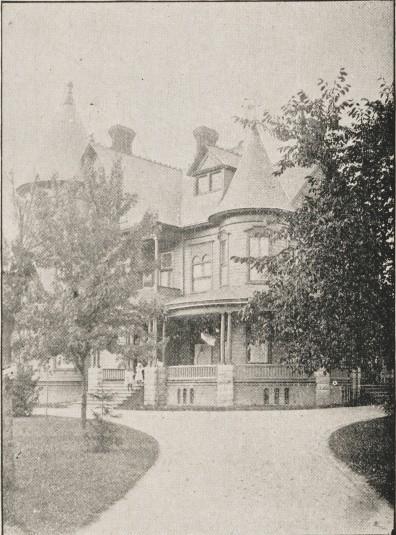
The original residential structure on this corner was the house of W. W. Fuller. Per the Duke Archives: "other occupants included Judge R.W. Winston & C.W. Jones [?] - was torn down to make way for bus station, n.d."
From Main St., Looking north.
From the corner of Dillard and Main, looking northwest.
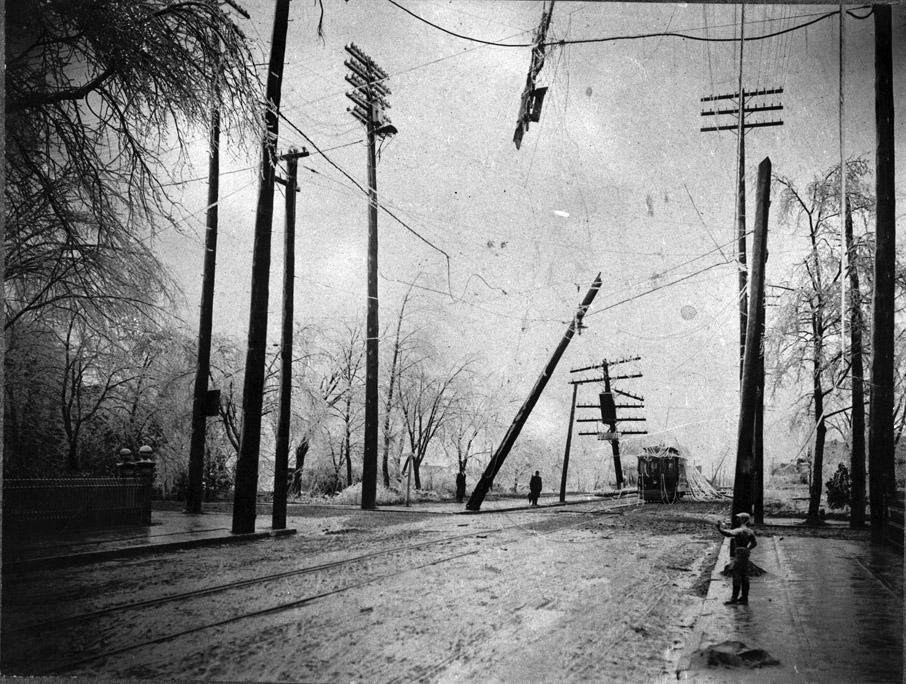
The intersection of East Main and Dillard, looking east. The fence around the Fuller House is to the left.
(Courtesy Duke Rare Book and Manuscript Collection - Wyatt Dixon Collection)
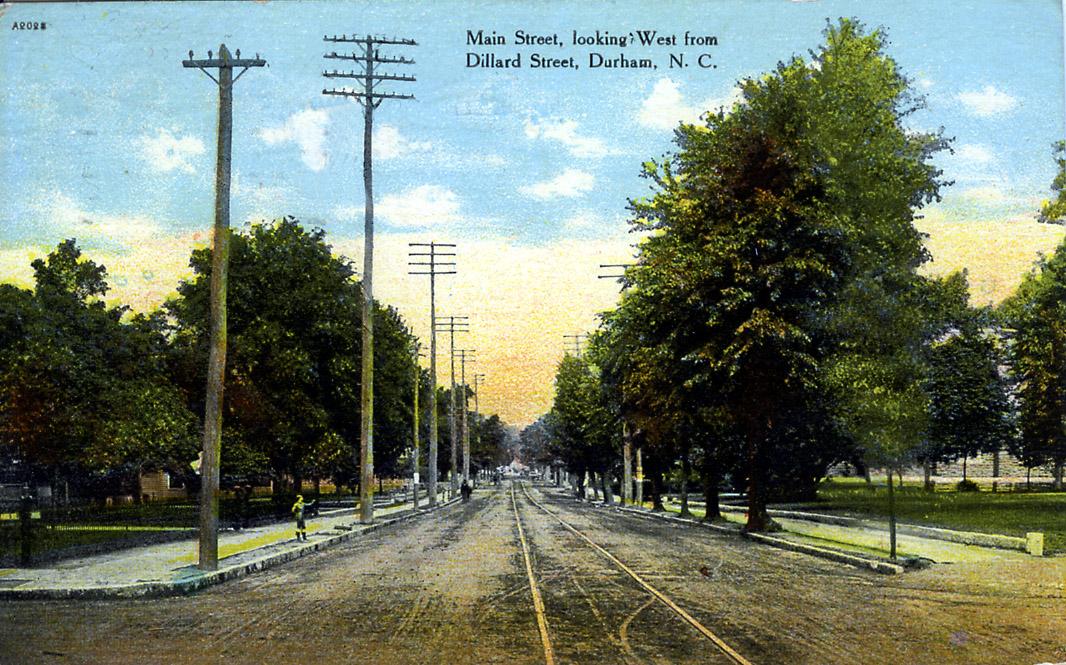
Looking west from East Main and Dillard, 1910.
(Courtesy Robby Delius)
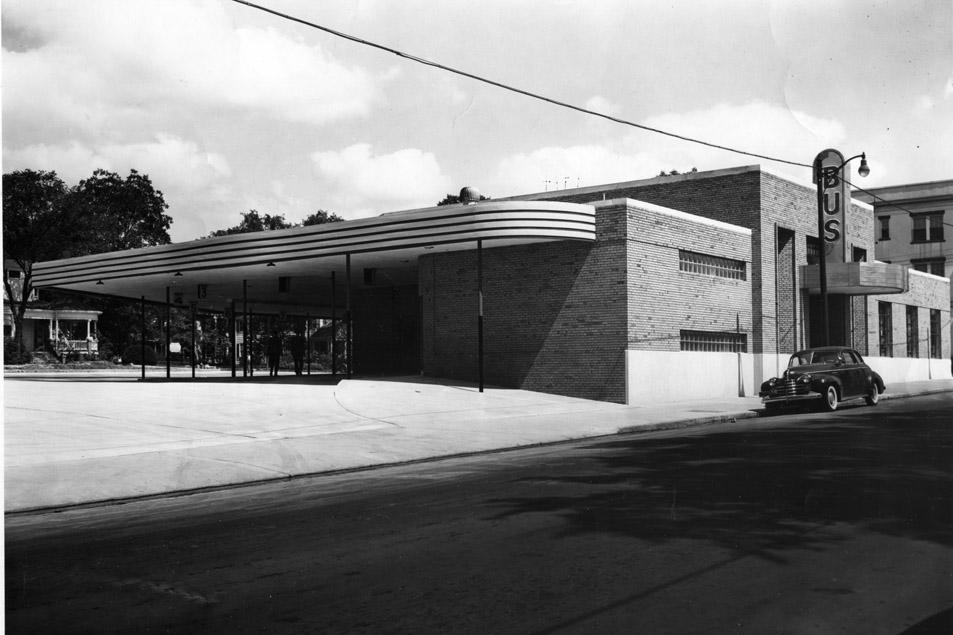
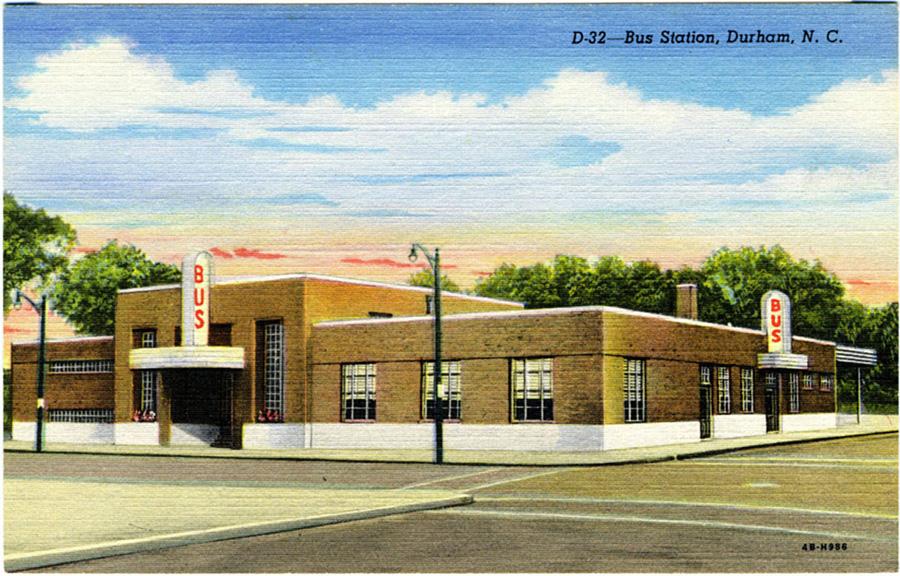
This house was torn down in 1942 and replaced with the Bus Station, which moved from its previous location structure at Mangum St. and Rigsbee.
(Courtesty Duke Archives, Wyatt Dixon Collection)
I apologize that the current picture and the bus station picture are taken from two different perspectives. The bus station picture is taken looking northeast, with a large Dillard Street house in the left background and the Franklin Court Apartments peeking out in the right background. St. Phillip's Episcopal would be to the back left, out of frame.
The current picture is taken looking west, towards St. Phillip's, with the Health Department (old Sears) to the left and Oldham Towers to the back (east).
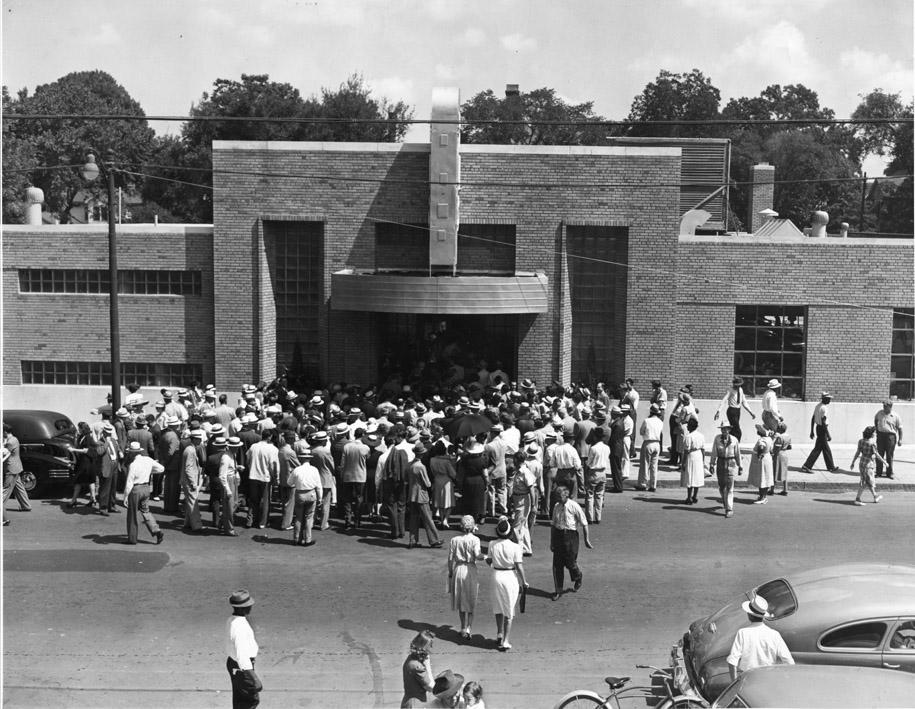
Here is another view of the old bus station, looking north, on its opening day.
(Courtesty Duke Archives, Wyatt Dixon Collection)
I appreciate the bus station architecturally, but I'm not sure how the decision was made to put this in the midst of a residential neighborhood, and I wonder how much it contributed to the decline of the residential structures behind it (the house visible in the first picture appears to be a large, elaborate house from the aerial shots; I can't imagine it remained viable for long located next to the bus station - although many of these houses were demolished using Federal Urban Renewal funds against the will of their owners).
Union Bus station, likely 1950s.
(Courtesy The University of North Carolina)
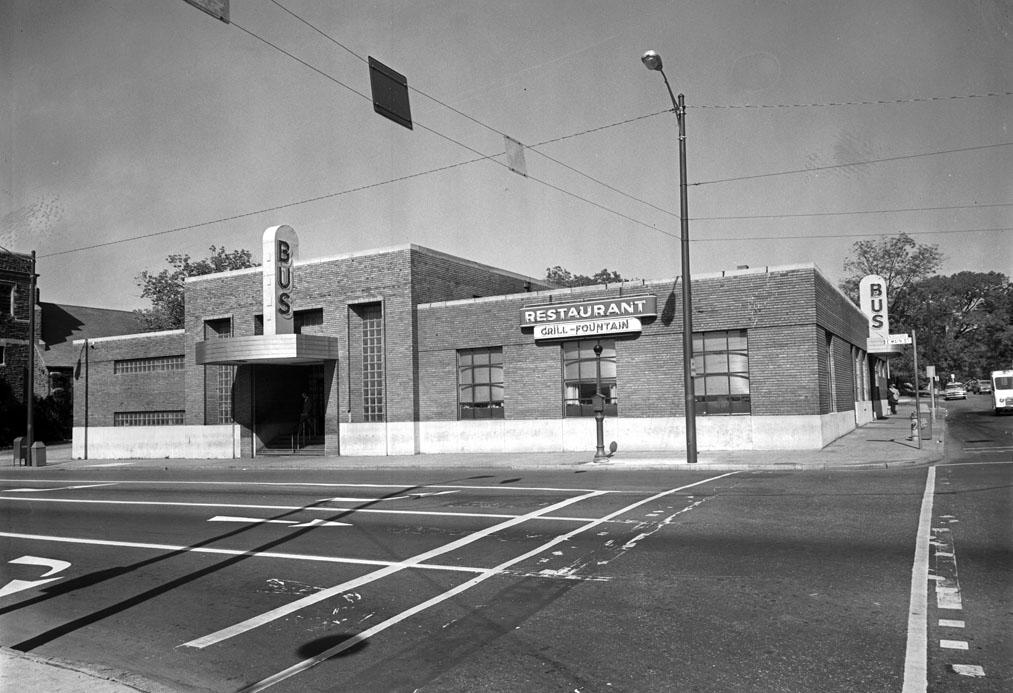
Looking north-northwest, 1961
(Courtesy Herald-Sun)
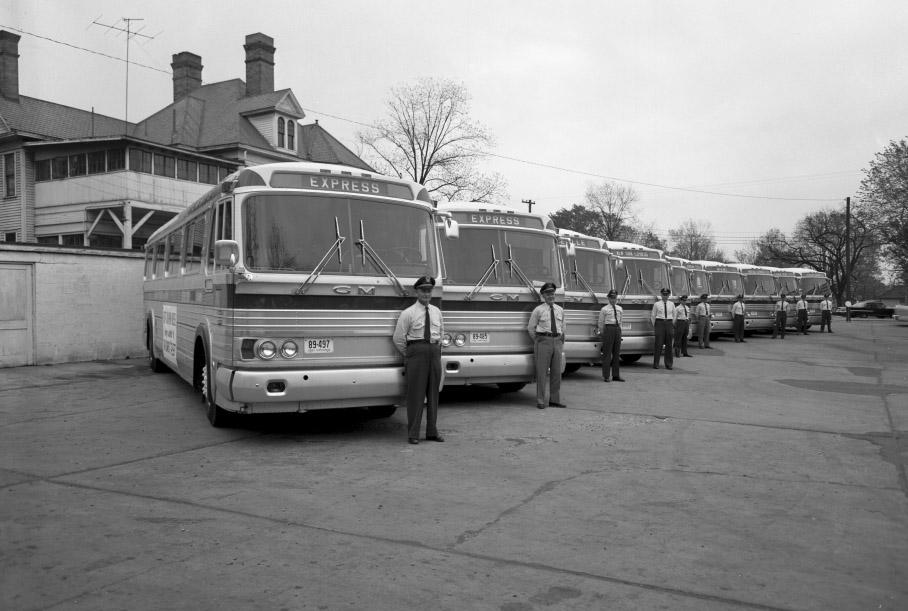
"Ten new buses at Bus Station" - 06.01.61 (Courtesy Herald-Sun)
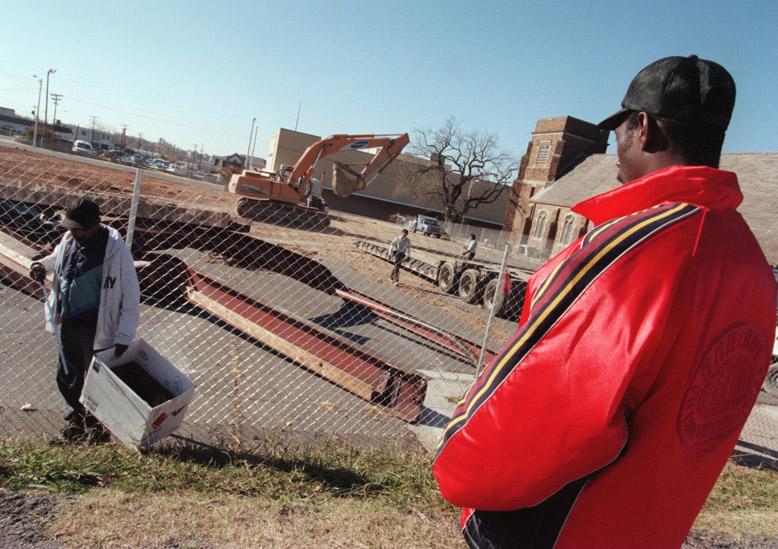
When the bus station went out of use as such is unclear to me. By the 1990s, it was being used for various uses, including a plasma center. St. Philip's was able to purchase the building in 1998 and made the unfortunate decision to demolish the structure.
Bus station demolition 11.23.98
(Courtesy Herald-Sun)
Bus station demolition 11.23.98
(Courtesy Herald-Sun)
Regardless of the merits or demerits of the bus station, it is clear that the current use of this land, a vacant lot still owned by St. Phillip's, is a poor use of the land.
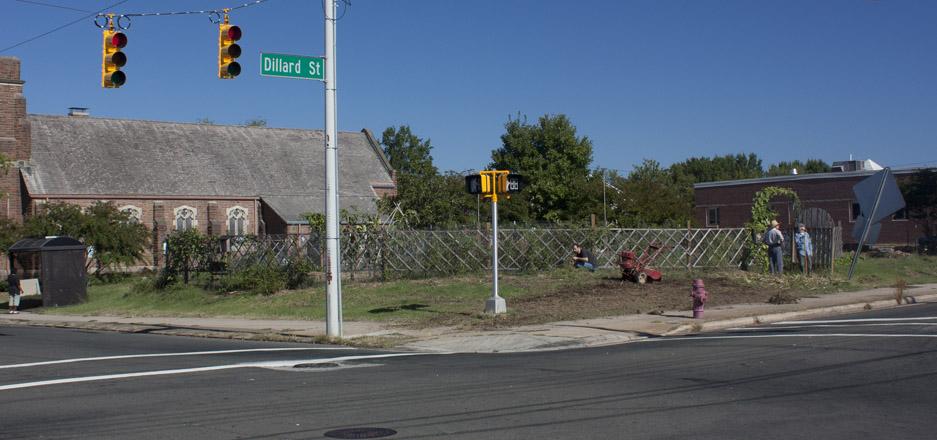
In 2009, St. Phillip's decided to make a garden on the vacant lot. While certainly an improvement on the 10-year vacant lot, it's still not a great use for a prominent urban street corner. I hope someday this corner will have a desirable building on it again.
Bus station site, 10.02.10
In conclusion of the "mini-series" about the E. Main/Dillard corner, you can see how an established residential neighborhood transitioned to more intense uses over the mid-20th century, which were later abandoned, leaving the neighborhood decimated. The architectural/site plan/land use choices for these more intense uses destroyed the energy of the corner, through the blank walls, large setbacks, intensity of scale, and surface parking that pervade this corner today.
I hope that Durham County understands the importance of each and all of these elements as they plan their new social services complex, and they think of building a neighborhood, not just a building.


Comments
Submitted by coco (not verified) on Wed, 11/1/2006 - 2:27am
Double turrets! Double porch columns! This house was amazing too. I am so blown away by all of the reckage that occurred on dillard street. crazy.
Submitted by Celeste Copeland (not verified) on Wed, 12/13/2006 - 7:54pm
As a member of St. Philip's, I can tell you that we have had some debate for a long time about what to do with that spot. I was not around when the bus station was demolished, but my understanding was that it had become a serious eye sore and a haven for illicit activities since it was abandoned in favor of the newer bus station on West Main.
Some ideas have been tossed around about what to do with the plot now. One has been to have a SEEDS garden, but potentially a structure would work, as well. Do you have any suggestions?
celeste
Submitted by Sven (not verified) on Wed, 12/13/2006 - 10:07pm
Celeste
Thanks for your comment.
I tend to think first about urban design and second about use. So a corner site should:
1) Be built out to the sidewalk.
2) Address both streets equally (with some combination of design elements, entrances, windows.)
3) Provide definition - should be at least as tall as St. Philip's so it can stand up to the new building going in across the street.
Use, including the bus station, is defined mostly by economics. The buildings diagonally across the intersection are described by some as eyesores and havens of illicit activity. The same structures in Carrboro would be renovated and have real estate agencies and restaurants in them.
So my suggestion would be to:
1) Design the right structure for the corner.
2) Recognize that use is temporary, and don't design something unifunctional. Figure out a good use of the structure to serve the community (and your goals) in the short run, but design flexible enough space to allow adaptation as the community changes.
A SEEDS garden would be better than grass, but I don't like corners devoid of buildings.
Thanks for giving me the chance to expound! I also know many neighbors around Dillard, Queen, and Holloway who I'm sure would love to talk to St. Philip's about what they'd like to see there.
GK
Submitted by Phil (not verified) on Sun, 6/17/2007 - 4:18pm
"Regardless of the merits or demerits of the bus station, it is clear that the current use of this land, a vacant lot owned by St. Phillip's, is a poor use of the land."
I won't argue whether a vacant lot is "poor use of the land", but I would point out that since an Episcopal church owns the property, two things are probably true: (1) they will want to build something that is meaningful and wisely chosen, given that it is part of (and physically connected to) their spiritual and earthly missions, and (2) the decision will be made in deliberations that err on the side of slowness rather than speed.
Two years ago, the then-rector of St. Philip's led a discussion (with me as one of the non-parishoner participants) about starting a small alternative high school, possibly to live on that site, with St. Philip's as a core sponsor. As you can guess, that discussion did not end in a "go for it" decision. But as you can also imagine, those kinds of examinations will often take years, not months, before concluding a yea or nay.
If we imagine a series of those as a church decides what to do with its land, it's easy to see the difference between how fast they'd move, in comparison (say) to a commercial owner, a residential owner, or even a city government.
Which is a long way of saying, input from all angles is probably welcome at the church, but don't expect anything to happen quickly. And sometimes that's a good thing.
Submitted by Gary (not verified) on Sun, 6/17/2007 - 6:27pm
Phil
You probably know by now that my philosophy on teardowns is to not demolish without a plan. So I can't countenance the demolition of the bus station in order to simply create a vacant lot. I've read the arguments on why it "had to come down." The same arguments have been made about countless pieces of irreplaceable architecture in many places by many people.
But beyond that, I get concerned about what kind of environments churches create around them. It would be all well and good if the parishoners lived in the same neighborhoods as their churches, but for many inner-city churches, such as St. Philip's, that is not the case. (I know of a good number of vacant houses nearby that could use some renovation if they want to, though.) Creating shelters, drug rehab programs, etc. is necessary, but it must be balanced with the knowledge that you are creating an environment that the people in the neighborhood have to live with when the parishoners go back to their side of town. Would (hypothetical) 'you' build what 'you' are going to build in your own neighborhood? If not, then I think it enters the territory of noblesse oblige.
Hard-working folks who don't make enough money to afford to live in market housing, and therefore live in the Liberty St. Apts probably don't really want to live next to a shelter - as much good as it does for folks, it has negative externalities. They live there because they have to.
For instance, build a restaurant - that has a culinary/management program for kids - that serves the neighborhood but that you would send your own kids to or, barring that - you would at least eat at on a Saturday night. Every neighborhood needs balance, and the east side does not have it. Build some low-income housing in Trinity Park, an alternative school in Forest Hills, a shelter in Hope Valley. The east could use middle-income housing, a grocery (since DOT is going to tear down the only one in the neighborhood), retail/jobs, a usable park (Oakwood, the only neighborhood park, is filled with people from the shelter passed out on the grass or not the playground equipment.)
People all want the same things in their neighborhoods, no matter how much money or how little money they have. I'd encourage St. Philip's to plan their construction/use accordingly. That would be a truly meaningful contribution to the neighborhood.
GK
Submitted by Christopher (not verified) on Wed, 11/25/2009 - 8:34pm
While a shame that such a gorgeous house had to come down (love the 3 cascading stairwell? windows) at least the bus station was architecturally appealing in its own way. But, as you have mentioned, tearing it down because it "harbored illicit activity" is both a bad policy, and almost an insult to the memory of the fuller house, as if it died in vain. When did it come down?
Add new comment
Log in or register to post comments.